California Institute of Technology
Pasadena, United States · Suburban
Caltech is not a university that happens to be good at science — it is a singular institution built around the proposition that a tiny community of exceptional scientific minds, given complete freedom to pursue hard problems, will change the world. For international students with a genuine passion for STEM, it is the most intellectually intense undergraduate experience on the planet.
Campus
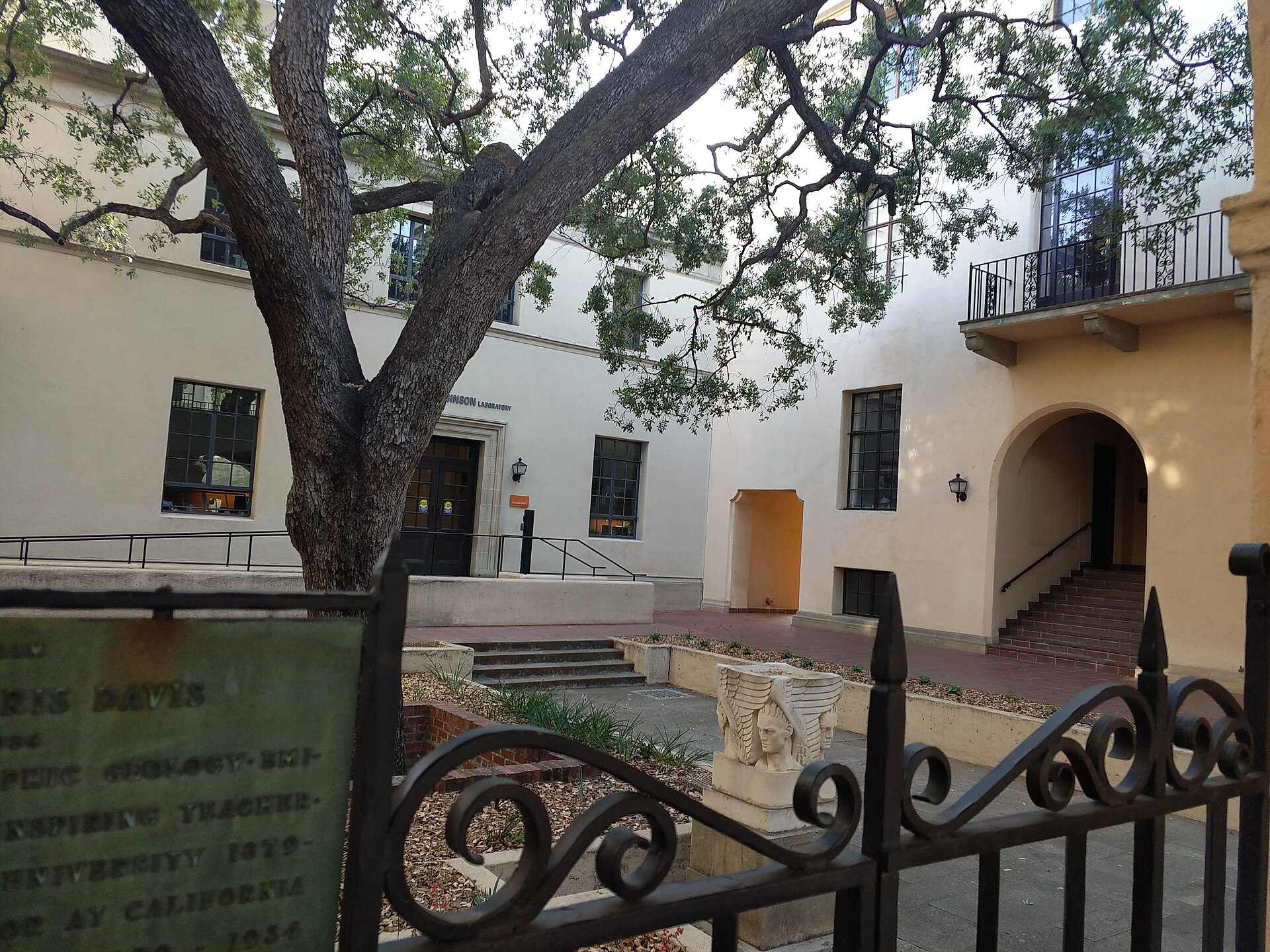
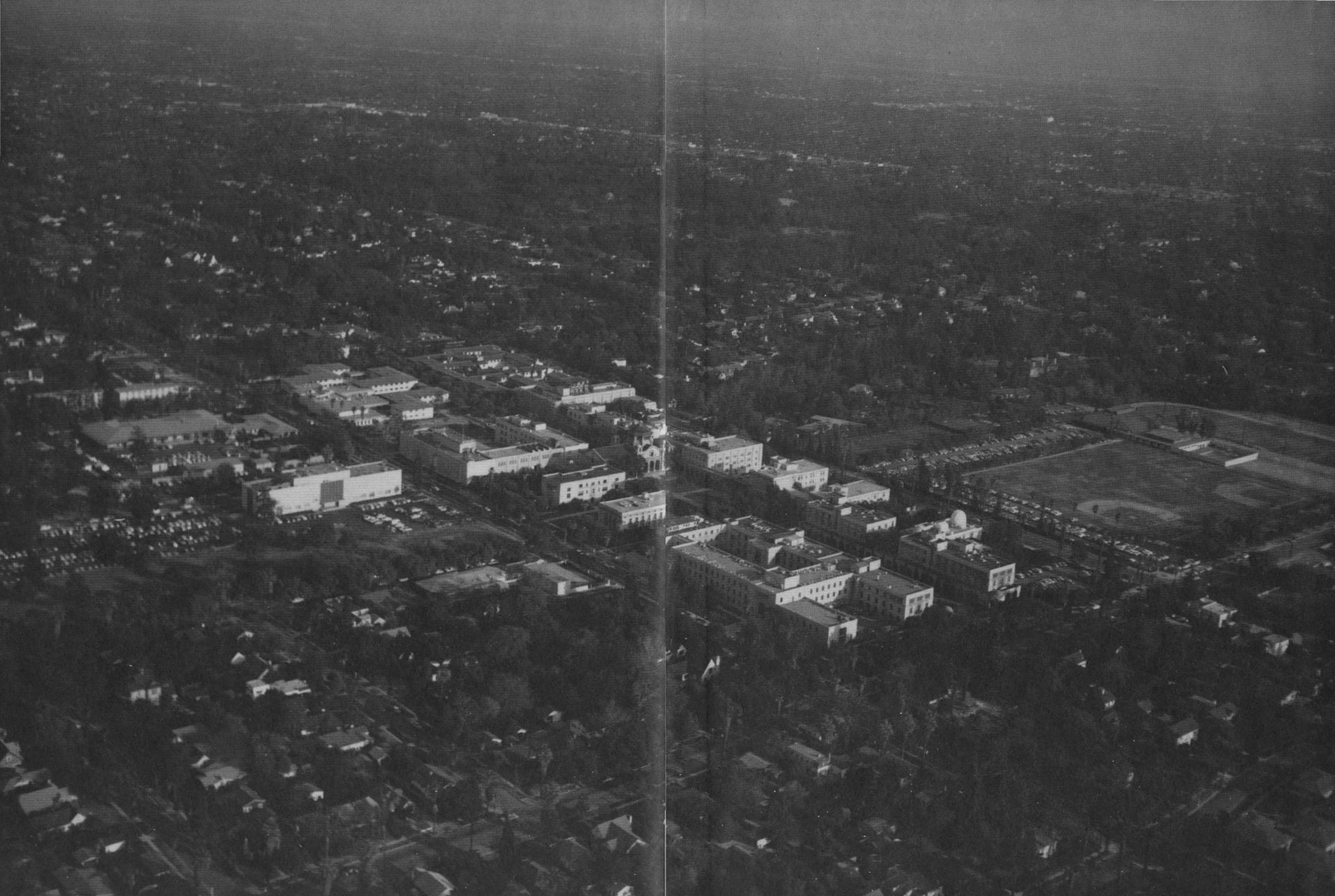
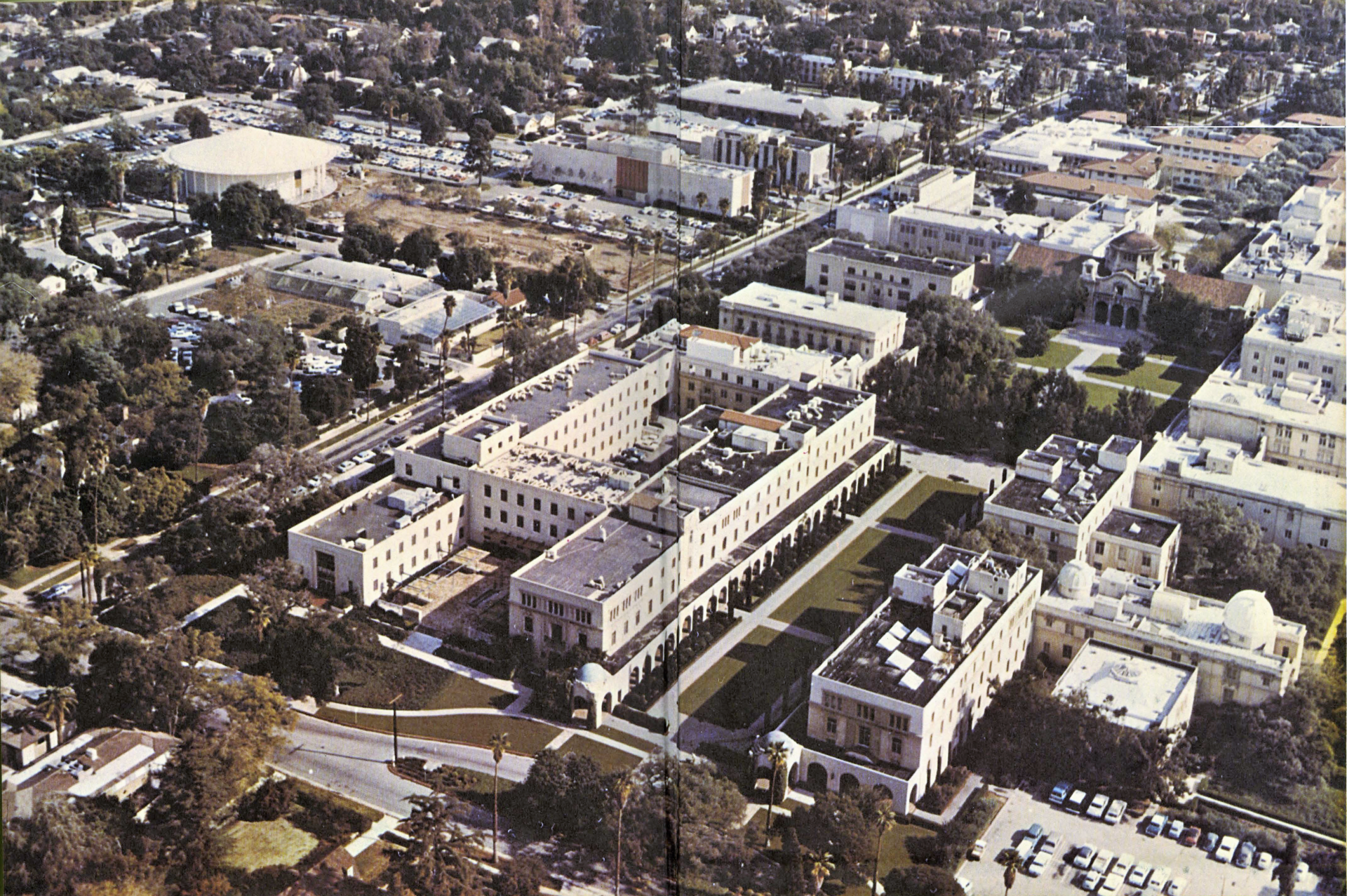
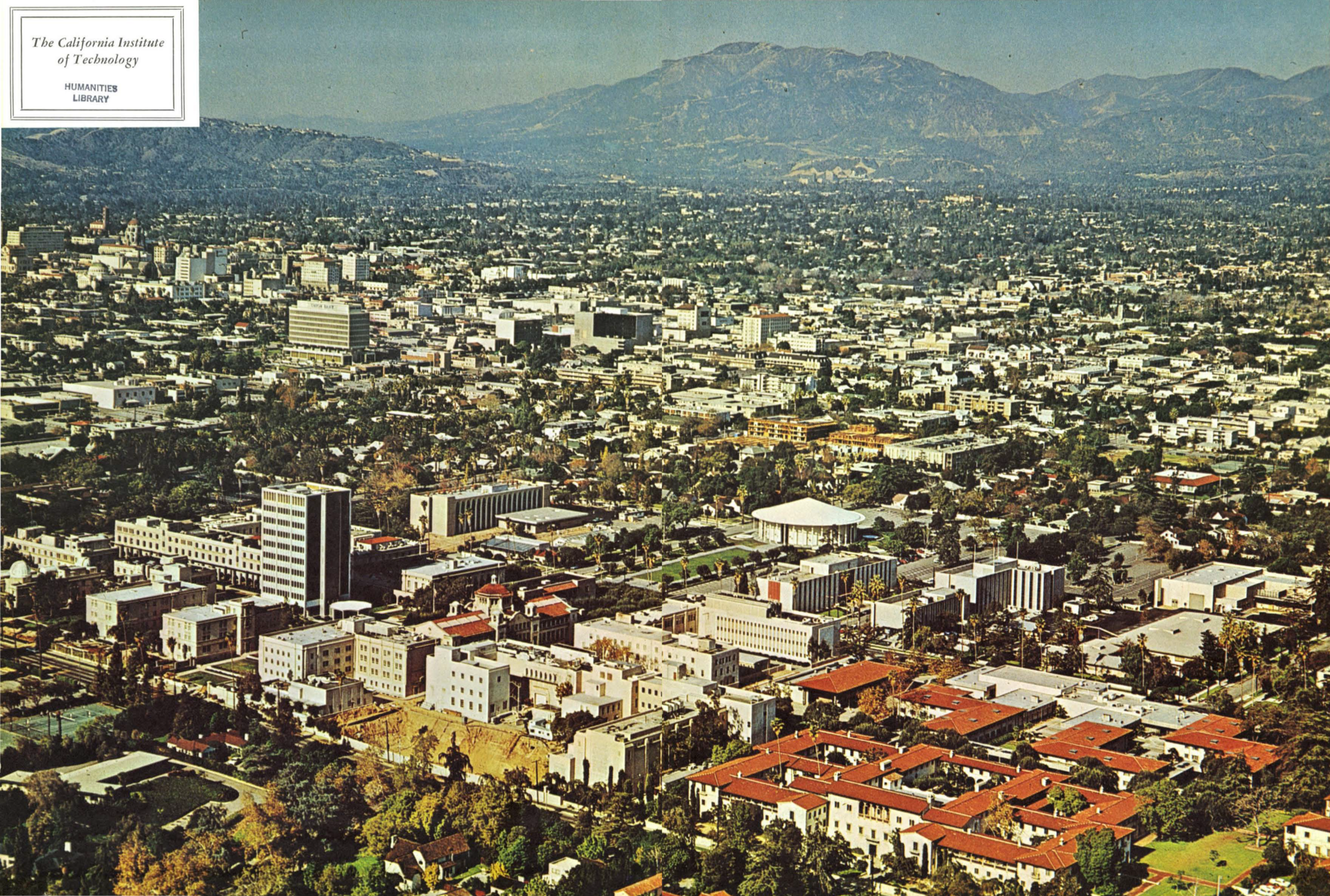
California Institute of Technology — campus in pictures
Real, freely-licensed photographs of the campus (via Wikimedia Commons).


Why Caltech — Research Intensity, JPL Access & Scientific Community
For a student who wants to do science — not just study it — Caltech is without peer. Its combination of Nobel-calibre faculty, JPL access, a collaborative culture built on the Honor Code, and an undergraduate class of fewer than 250 students per year creates a research experience that no larger university can replicate.
Caltech Acceptance Rate & Admitted Class Profile
Stats
Profile Stats
Rea Vs Rd
Caltech Admissions Requirements — Academics, SAT/ACT & STEM Profile
- Near-perfect grades in the most rigorous STEM courses available
- AP Calculus BC, AP Physics C, AP Chemistry are standard for competitive applicants
- IB HL Maths and HL Sciences at 6–7 expected
- Course rigour in mathematics and sciences is weighted heavily
- SAT middle 50%: 1530–1580
- ACT middle 50%: 35–36
- Standardised testing is required — Caltech restored its test requirement for Fall 2025 applicants onward
- SAT Math 800 is common among admitted students
- IB: 43+ points, 7s in HL Maths and at least one HL Science
- A-Levels: A*A*A* in Mathematics, Further Mathematics, and a science
- National and international Olympiad achievements are highly valued
- Research experience — particularly published or presented work — is a meaningful differentiator
Caltech Application Components — Common App, Essays & Requirements
Caltech accepts the Common Application exclusively. Below is every component of a complete application, with strategic notes for international applicants.
Caltech Essays — Writing for a Scientific Community
Tips
Prompts
What Caltech Admissions Officers Are Looking For
Caltech uses a holistic Committee-Based Evaluation (CBE) process where every application is reviewed in full. The process is specifically attuned to STEM preparation, intellectual curiosity, and the collaborative values of the Caltech community.
Caltech Financial Aid & Scholarships for International Students
Caltech meets 100% of demonstrated financial need for every admitted student. All institutional aid is grant-based. Caltech is need-aware for international applicants — financial need may be considered during the admissions review for international students — but those who are admitted receive full need-based aid packages.
Aid amounts are estimates based on Caltech's published guidelines. Individual packages are determined by the Financial Aid Office on a case-by-case basis using the CSS Profile.
Key Dates
Advantages
- Earlier decision — know by mid-December
- Demonstrates strong interest in Caltech as a priority institution
- More time to plan financially and logistically if admitted
- REA is non-binding — you are not committed until May 1
Disadvantages
- Cannot apply Early Action or Early Decision to other private universities simultaneously
- Application must be complete and competitive by November 1
- Less time to add senior-year achievements or test score improvements
- Caltech itself reports negligible difference in acceptance rates between REA and RD
Caltech & Interviews — What Happens Instead
Caltech does not conduct traditional admissions interviews. Instead, the admissions office uses InitialView — an unscripted, recorded conversation and writing sample — to gain insight into how applicants communicate and think. While not formally required, completing an InitialView submission is strongly recommended, particularly for international applicants who benefit from an additional channel to demonstrate their intellectual engagement beyond the written application.
Meta
Questions
Caltech's Eight Residential Houses
Unlike Harvard's house lottery, Caltech's house system is one of the most distinctive features of undergraduate life. All eight houses maintain their own dining traditions, social customs, and community cultures. First-year students are assigned to a house through a rotation process — they visit houses and houses select members — creating genuine communities rather than random assignments.
Houses
Lottery Steps
- Incoming first-years participate in Rotation — a week-long process of visiting all eight houses
- Students rank their preferred houses; houses rank their preferred students
- A matching algorithm assigns each student to a house based on mutual preferences
- Students typically remain in their house for all four years, though housing lotteries allow transfers
- South Houses (Blacker, Dabney, Fleming, Ricketts) are the oldest; North Houses (Lloyd, Page, Venerable) built 1960; Avery built 1996
Caltech Academic Divisions & Undergraduate Programmes
- {"label":"Nobel Prizes in Physics (alumni/faculty)","value":"Multiple"}
- {"label":"Key programmes","value":"Physics, Astrophysics, Maths"}
- {"label":"JPL connection","value":"Deep"}
- {"label":"Research intensity","value":"Highest"}
- {"label":"Key programmes","value":"CS, EE, Mechanical, Aerospace"}
- {"label":"Industry connections","value":"SpaceX, NASA JPL, Google"}
- {"label":"Fastest-growing field","value":"Computer Science"}
- {"label":"Interdisciplinary links","value":"Biology, Chemistry, Physics"}
- {"label":"Nobel Prizes in Chemistry","value":"Multiple"}
- {"label":"Research focus areas","value":"Synthesis, materials, biotech"}
- {"label":"Lab access","value":"From Year 1"}
- {"label":"Graduate-school placement","value":"Top tier"}
- {"label":"Key programmes","value":"Biology, Biochemistry, BBE"}
- {"label":"Research focus","value":"Neuroscience, genetics, biotech"}
- {"label":"Medical school pipeline","value":"Strong"}
- {"label":"SURF participation","value":"Common"}
- {"label":"Key programmes","value":"Geophysics, Planetary Science"}
- {"label":"JPL link","value":"Direct — Mars missions"}
- {"label":"Field work","value":"Yes"}
- {"label":"Seismology research","value":"World-leading"}
- {"label":"Requirement","value":"All undergrads take HSS courses"}
- {"label":"Offered as major","value":"Economics, History of Science"}
- {"label":"Function","value":"Complements STEM education"}
- {"label":"Writing requirement","value":"Central to curriculum"}
Research & Extracurricular Opportunities at Caltech
Career Outcomes & Caltech Alumni Network
Caltech's alumni community is small relative to Ivy League schools, but extraordinarily concentrated in the most technically demanding fields on Earth. A Caltech degree is one of the most legible signals of scientific capability in the world's most rigorous industries.
Stats
Categories
Our Caltech Admissions Track Record & Student Success Stories
Faqs
Does Caltech have a preferred major for admission?+
Caltech admits students with a declared intended major, but all students complete the same rigorous first-year core curriculum in mathematics, physics, chemistry, and biology regardless of intended concentration. You are not admitted to a specific division — you declare your option (major) during sophomore year.
Is Caltech test-optional?+
No. Caltech restored its standardised testing requirement beginning with applicants for Fall 2025 enrollment. SAT or ACT scores are required for all applicants. The middle 50% SAT range is 1530–1580.
Does Caltech conduct interviews?+
Caltech does not conduct traditional admissions interviews. Instead, the admissions office accepts InitialView — an unscripted video conversation and writing sample — as a supplementary evaluation tool. This is recommended but not required.
Is Caltech need-blind for international students?+
Caltech is need-blind for domestic students but need-aware for international applicants — financial need may be a factor in the admissions decision. However, once admitted, all students receive financial aid packages meeting 100% of demonstrated need.
Can international students participate in SURF@JPL?+
SURF@JPL, the programme at NASA's Jet Propulsion Laboratory, is open to US citizens and permanent residents only. The standard SURF programme on campus is open to Caltech undergraduates regardless of nationality.
What is Caltech's Honor Code and how does it affect student life?+
Caltech's Honor Code — 'No member of the Caltech community shall take unfair advantage of any other member' — is foundational to campus culture. It enables take-home exams, open collaboration on problem sets, and a trust-based academic environment unlike any other university. Incoming students are expected to internalise this culture before arriving.
How competitive is the Caltech REA round compared to Regular Decision?+
Caltech itself states that 'admission is highly selective in both Early Action and Regular Decision, and there is a negligible difference in admission rates between the two.' Unlike some other universities, applying REA does not provide a material acceptance-rate advantage.
Book a Free Caltech Admissions Strategy Session
In 60 minutes our Caltech admissions specialists will review your STEM profile, identify your research and competition record, advise on essay strategy for Caltech's science-focused prompts, and determine whether REA or Regular Decision is the right choice for your application timeline.
- No commitment required
- Caltech-specific strategy — not generic Ivy advice
- STEM application experts with deep knowledge of Caltech's evaluation process
Caltech Academic Requirements
Caltech Academic Standards — The Honest Breakdown for International Students
What GPA, test scores, and academic profile do Caltech's admitted students have? What does mathematical and scientific excellence look like at the world's most research-intensive undergraduate institution?
GPA & Class Rank
Caltech and GPA — What the Data Shows
Caltech does not publish a minimum GPA. In practice, virtually all admitted students are at or near the top of their graduating class, with unweighted GPAs typically at or above 3.95. A minimum GPA of 3.95 is associated with the typical admitted student profile.
A near-perfect GPA is necessary but not sufficient. What distinguishes Caltech applicants is not grades alone but grades combined with course rigour in advanced mathematics and science, research experience, and competition achievement.
Academic Context
How Caltech Reads Academic Performance Across International Systems
Caltech's Committee-Based Evaluation (CBE) ensures every application is reviewed against the context of the applicant's specific educational environment. The admissions office is experienced at reading transcripts from IB, A-Level, Indian boards, Chinese high schools, and many other international systems.
Standardised Testing
SAT Scores at Caltech — What You Need and Why It Matters
Caltech SAT Data — Admitted Student Profile
| Label | Score | Percent |
|---|---|---|
| 25th percentile | 1530 | 85 |
| 75th percentile | 1580 | 97 |
| Median (estimated) | ~1555 | 91 |
Standardised Testing
ACT Scores at Caltech — The Data and the Strategy
Caltech ACT Data — Admitted Student Profile
Metrics
Comparison Cards
Testing Policy
Caltech's Test-Required Policy — What It Means for Applicants
Caltech restored its standardised testing requirement beginning with applicants for Fall 2025 enrollment. Unlike many US universities that remain test-optional, Caltech has made a deliberate policy decision that test scores are a meaningful and valuable part of holistic evaluation for STEM candidates.
Submit Items
Withhold Items
International Curricula
IB and A-Levels at Caltech — Specific Benchmarks
- {"label":"Competitive range","value":"43+ points"}
- {"label":"HL expectations","value":"7 in HL Maths AA (or AI HL) and 7 in at least one HL Science"}
- {"label":"Subject rigour","value":"HL Mathematics Analysis & Approaches strongly preferred; HL Physics, HL Chemistry, or HL Biology depending on intended division"}
- {"label":"Extended Essay","value":"A or B grade; STEM subject preferred for science applicants"}
- {"label":"Competitive range","value":"A*A*A* minimum expectation"}
- {"label":"Subject rigour","value":"Mathematics + Further Mathematics + Physics or Chemistry for physical science applicants; Mathematics + Computer Science or Statistics for CS applicants"}
- {"label":"STEP / MAT","value":"Not required by Caltech, but strong STEP/MAT performance is useful context for the strength of mathematical preparation"}
Advanced Placement
AP Courses at Caltech — What Counts and What to Take
For students in US or international schools offering AP courses, Advanced Placement performance is an important component of the academic profile — particularly AP Calculus BC, AP Physics C (both Mechanics and Electricity & Magnetism), and AP Chemistry.
Academic Rigour
Rigour of Secondary School Record — Caltech's Core Academic Standard
Caltech's admissions office treats the rigour of the secondary school record as the primary academic factor. This means evaluating not just grades but whether a student challenged themselves with the most demanding courses available — particularly in mathematics and science.
The student who took every mathematics and science course their school offered, then went further, is the student Caltech is looking for.
STEM Preparation
Mathematics and Science Preparation — What Caltech's Curriculum Actually Demands
Caltech is one of the few universities in the world where every undergraduate — regardless of major — takes a demanding core curriculum including mathematics, physics, chemistry, and biology in the first year. This is not optional and it is not waived. Understanding what this curriculum demands is essential to understanding what preparation Caltech is looking for.
Language Proficiency
English Language Requirements for International Caltech Applicants
English proficiency exams are required for all international applicants unless their native language is English or English is the primary language of instruction at their secondary school. Caltech accepts TOEFL, IELTS, and the Duolingo English Test.
Caltech's supplemental essays — while shorter than those at other universities — are evaluated carefully for clarity, precision, and the ability to communicate scientific ideas in writing. English language ability is assessed through the written application as well as through the InitialView conversation, which includes a writing sample.
By Option (Major)
Academic Requirements by Caltech Option — What Each Division Expects
Caltech admits students to a specific intended option (major). All students complete the same core curriculum in Year 1, but the application should reflect genuine academic preparation aligned to the intended division.
| Signals | Expectation | Concentration |
|---|---|---|
| Competition mathematics (AIME/USAMO/IMO); proof-level problem solving | HL Maths AA / Further Maths A*; calculus beyond standard curriculum | Mathematics |
| USACO Platinum; original algorithms research; projects with real deployment | HL Maths AA + strong CS background; programming portfolio | Computer Science |
| IPhO / national physics olympiad; research in lab or independent project | HL Maths AA + HL Physics 7; AP Physics C | Physics |
| IChO / national chemistry olympiad; lab research experience | HL Chemistry 7 + HL Maths AA | Chemistry / Chemical Engineering |
| Robotics competition (FIRST); engineering design projects; aerospace modelling | HL Maths + HL Physics; AP Calculus BC + AP Physics C | Mechanical / Aerospace Engineering |
| Independent biology research; science fair; pre-med preparation | HL Biology + HL Chemistry 7s | Biology / Biological Engineering |
| Seismology projects; planetary science research; earth systems modelling | HL Sciences + strong mathematics | Geological and Planetary Sciences |
International Systems
How Caltech Evaluates International Education Systems
Roadmap
Building an Academic Profile for Caltech — What to Do at Each Stage
- Select GCSE/MYP subjects that preserve maximum options for advanced mathematics and sciences.
- Identify whether IB or A-Levels is the right upper-secondary path.
- Begin exploring competition mathematics — AMC 8, AMC 10, or national equivalents.
- Start coding, if interested in CS; begin independent science reading beyond the curriculum.
- Select the most rigorous available mathematics and science options for upper secondary.
- Begin AMC/AIME preparation, or national Olympiad preparation in your strongest science subject.
- Identify SURF-equivalent or research apprenticeship opportunities in your country.
- Begin SAT or ACT preparation if targeting US universities.
- Pursue a science Olympiad or national mathematics competition seriously.
- Apply for competitive summer research programmes (RSI, Simons SSP, Polygence, or equivalents).
- Begin developing independent STEM projects or research questions.
- Take SAT/ACT; aim for 1540+ before beginning the application.
- Finalise predicted grades — ensure mathematics and science courses are the most rigorous available.
- Complete Caltech's supplemental essays; Tychr coaches the scientific specificity these prompts require.
- Submit REA application by November 1 or RD by January 4.
- Complete InitialView submission.
Common Pitfalls
Academic Mistakes That Cost Caltech Applications — And How to Avoid Them
Real Outcomes
What Academic Profiles Tychr's Caltech-Admitted Students Had
The following profiles represent academic backgrounds of students Tychr has supported toward Caltech admission or Caltech-equivalent outcomes. They illustrate the range of preparation that is genuinely competitive — and what made each application distinctive.
Faqs
What IB score do I need for Caltech?+
The typical competitive range is 43+ points, with 7s in HL Mathematics AA and at least one HL Science. A 43 with weaker HL choices (Visual Arts, Film) is significantly less competitive than a 41 with HL Maths AA, HL Physics, and HL Chemistry.
Does Caltech prefer SAT or ACT?+
Caltech accepts both equally. The median admitted student scores at the 99th percentile on either test. Take a diagnostic of both and pursue the one where your score is higher after practice.
Is research experience required for Caltech admission?+
Not formally required, but in practice the most competitive Caltech applicants demonstrate some form of research engagement — whether through SURF-equivalent programmes, Olympiad competitions, independent projects, or university lab placements. A strong application without any research record is rare.
Can I take IB Mathematics: Applications and Interpretation for Caltech?+
HL Mathematics AI is accepted, but HL Mathematics AA is strongly preferred for STEM applicants. Caltech's core curriculum begins at a level that assumes calculus fluency. Choosing AI when AA was available may raise questions about mathematical preparation.
Does Caltech accept students with a non-STEM academic profile?+
Caltech's Humanities and Social Sciences division does admit a small number of students intending to study economics or social science, but all students — regardless of major — complete the same mathematically and scientifically demanding core curriculum. Caltech is not the right choice for students who do not have genuine mathematical aptitude and interest.
Financial Aid & Scholarships
Caltech Financial Aid — The Full Picture for International Families.
Caltech meets 100% of demonstrated financial need for every admitted student. No merit scholarships exist — all aid is need-based. Here is what Caltech actually costs, how the aid programme works, and what international students must do to access it.
Cost Transparency
What Caltech Actually Costs — The Full Annual Figure
Caltech's endowment funds a financial aid programme that meets 100% of demonstrated need through grants and work-study. For families earning under $100,000/year with typical assets, the package typically covers tuition, fees, housing, and food without loans.
Admissions Policy
Caltech's Need-Aware Policy for International Students — What It Means
Caltech is need-blind for domestic students — financial circumstances play no role in admissions decisions. For international students, Caltech is need-aware: financial need may be considered as a factor in the admissions decision. However, international students who are admitted receive financial aid packages meeting 100% of their demonstrated need.
Institutional Commitment
Why Caltech Can Offer This Aid — The Endowment and the Mission
Financial Aid Walkthrough
Applying for Caltech Financial Aid — The Process Step by Step
Caltech financial aid is not automatic. It requires a separate CSS Profile application submitted by the same deadline as the admissions application. International students who do not apply for aid as first-year applicants may not be able to apply in subsequent years.
- Visit cssprofile.collegeboard.org
- Create or log in to a College Board student account
- Parent income from all sources
- Parent assets (savings, investments, real estate, business interests)
- Student income and assets
- Household size
- Unusual financial circumstances or changes in financial situation
- {"date":"November 1","label":"REA Applicants"}
- {"date":"February 1 (approx.)","label":"RD Applicants"}
INTERNATIONAL AID
Caltech Financial Aid for International Students — The Full Policy
Caltech's financial aid for international students operates under a need-aware admissions policy with a limited international aid budget. Here is how it works in practice.
AID ESTIMATES
Caltech Financial Aid by Family Income — Approximate Estimates
Caltech Aid by Family Income (Approximate — For Illustrative Purposes)
Figures are approximate illustrative estimates. Actual awards depend on full CSS Profile assessment by Caltech's Financial Aid Office. Individual circumstances — assets, family size, unusual expenses — significantly affect the final package.
For families earning under $100,000/year with typical assets, Caltech packages typically cover costs without a loan component. Average grant aid for the Class of 2028 was just under $73,000. Individual packages are determined by the full CSS Profile assessment.
| Grant | Income | Contribution |
|---|---|---|
| ~$73,000+ | Under $65,000 | ~$0 (no loans) |
| ~$70,000–$73,000 | $65,000–$100,000 | Minimal (no loans) |
| ~$60,000–$70,000 | $100,000–$150,000 | Scaled contribution |
| ~$45,000–$60,000 | $150,000–$200,000 | Increasing contribution |
| Scales down | Above $200,000 | Scales up significantly |
Table Headers
AID PHILOSOPHY
Caltech Scholarships — Need-Based Only, No Merit Awards
Caltech does not award merit scholarships. All Caltech financial aid is need-based — awarded entirely on the basis of demonstrated financial need, not academic achievement.
EXTERNAL FUNDING
External Scholarships Available to Caltech Students
While Caltech provides only need-based institutional aid, external scholarships can supplement the financial aid package and are worth researching carefully.
DEBT & LOANS
Caltech's Loan Policy — No Loans for Qualifying Families
Caltech's stated goal is that students from families earning under $100,000/year with typical assets should be able to attend without taking on loans. For these families, the financial aid package covers tuition, fees, housing, and food through grants and work-study alone.
STUDENT EMPLOYMENT
Work-Study at Caltech — What to Expect
Caltech financial aid packages include a student employment component — students are expected to contribute a portion of their education costs through on-campus employment. This is a standard part of the aid package and does not significantly affect academic work.
- Research assistant positions in faculty labs (combined income and research experience)
- SURF programme research positions (funded separately at $8,110 for the summer)
- Dining hall and food services
- Library and administrative roles
- Computing and IT support
- Undergraduate teaching assistant positions (for advanced students)
BENCHMARKING
Caltech vs. Peers — Financial Aid Comparison
| Policy | School | No Loans | Typical Cost |
|---|---|---|---|
| Need-aware (internationals), full-need, no-loan threshold | Caltech | Yes (under $100K/yr) | ~$0 (under $100K) |
| Need-blind, full-need, no loans | Harvard | Yes | $0 (under $85K) |
| Need-blind, full-need, no loans | MIT | Yes | $0 (under ~$90K) |
| Need-blind, full-need, no loans | Princeton | Yes | $0 |
| Need-aware, full-need, some loans | Yale | No (minimal) | ~$5,000–$15,000 |
| Need-aware, substantial loans | Columbia | No | ~$10,000–$25,000 |
COST ANALYSIS
Caltech vs. Alternatives — What You Actually Pay
For a family earning $70,000/year, Caltech — with a sticker cost of $94,412/year — may genuinely cost nothing in terms of loans or out-of-pocket expense. The grant package covers full demonstrated need. The sticker price is not the real price for qualifying families.
| Policy | School | Contribution | Four Year Cost |
|---|---|---|---|
| Need-aware, full-need, no-loan (under $100K) | Caltech | ~$0 | ~$0 |
| Need-blind, full-need, no loans | Harvard / MIT / Princeton | ~$0 | ~$0 |
| Need-aware, full-need, some loans | Yale / Columbia | ~$10,000–$15,000/yr | ~$40,000–$60,000 |
| Limited international aid | Top out-of-state US public | ~$30,000–$45,000/yr | ~$120,000–$180,000 |
FINANCIAL APPEALS
Appealing a Caltech Financial Aid Decision — When and How
Caltech's initial financial aid offer is based on the CSS Profile. If family circumstances have changed or the offer does not accurately reflect the situation, Caltech has an appeals process through its Student Financial Services office.
Caltech's financial aid formula is already structured to be generous for lower-income families. The most successful appeals are based on a genuine change in circumstances or a clear error in the CSS Profile — not on disagreement with the formula's assessment of a stable situation.
How To Appeal
- Contact Caltech's Student Financial Services office directly
- Provide a written statement explaining the specific changed circumstance or error
- Submit supporting documentation (income verification, medical bills, job loss documentation)
When To Appeal
- Family financial circumstances have changed significantly since submitting the CSS Profile
- A parent's job loss, medical emergency, or other major financial event has occurred
- The CSS Profile contained a factual error or omission
- The initial offer appears significantly inconsistent with actual financial circumstances
TIMELINE & PLANNING
Planning for Caltech Costs — What to Do and When
Admissions Strategy
Caltech Essays — Everything You Need to Know to Write Them Well.
Caltech's supplemental essays are short, focused, and entirely about science. They are not asking who you are in the broad sense — they are asking how you think about STEM, what questions you pursue, and how you engage with difficulty. This guide covers every prompt, the strategy behind each, and the mistakes that eliminate otherwise strong candidates.
Requirement Overview
Caltech Essay Requirements — The Full Picture
Caltech uses the Common Application. In addition to the Common App personal statement, Caltech requires four short supplemental questions — three STEM-focused and one community question — plus an optional academic context essay. The supplemental questions are substantially shorter than those at most Ivy League schools, but are harder to write well precisely because brevity requires precision.
Required Items
Optional Items
Official Prompts
Caltech's Supplemental Essay Prompts — 2026–27
The 650-Word Foundation
The Common App Personal Statement at Caltech — What It Needs to Do
The Common App personal statement goes to every university on your list. At Caltech, it should reveal the intellectual and personal character that makes you more than your test scores and grades. Caltech does not ask 'Why Caltech?' in the personal statement — save that for the supplemental questions implicitly.
At Caltech, the personal statement must complement the STEM-focused supplementals without duplicating them. If your supplementals cover your physics research, your personal statement might explore a humanistic dimension, a formative relationship, or an unexpected intellectual interest. The goal is to add dimensions to your application, not repeat the same story in different words.
Looking For List
- Intellectual authenticity — what you actually care about, in your own voice
- Evidence of how your mind works — curiosity, rigour, honesty about difficulty
- A perspective or experience that genuinely cannot be inferred from the rest of the application
- Specificity — the named problem, the exact moment, the actual experiment
Tired Of List
- Generic 'I love science' narratives that could have been written by any applicant
- Achievement summaries that duplicate the activity list
- Essays starting with famous scientists' quotes or dictionary definitions
- Adversity narratives that perform suffering without revealing genuine character
Strategic Approach
Caltech Supplement Strategy — How to Use Each Question
Creative Strategy
Choosing What to Write About — The Decision That Shapes Everything
Caltech's essays are not about what you have accomplished — they are about how you think. The best topics are specific enough that the essay could only have been written by you, and honest enough that the intellectual process is visible.
Criteria
Caution Topics
- Generic STEM passion without a specific problem or discovery named
- Any topic already fully covered in the other supplemental responses
- Collaboration stories where the collaboration is the point, not what you learned intellectually
- Community contribution essays that list personality traits instead of concrete contributions
Common Pitfalls
Essay Mistakes That Eliminate Caltech Applications
- Writing about STEM generally instead of a specific subfield, question, or discovery — Caltech can tell the difference between genuine specialisation and performed interest
- Using all three Scientific Drive prompts to describe the same type of experience — if your rabbit hole, sustained project, and creation are all about the same topic, you're telling one story instead of three
- Writing the Community Contribution essay in abstract terms ('I would contribute my enthusiasm') instead of naming a concrete, specific thing
- Duplicating content across the personal statement and the supplementals — each piece of writing should reveal something new about you
- Treating the optional Academic Context essay as a bonus essay slot — it is for genuine extenuating circumstances only
- Ignoring Caltech's AI ethics guidelines, which applicants must acknowledge before submission — use AI tools transparently and in compliance with stated guidelines
- Submitting essays below the minimum word counts — the lower bounds (150 words, 100 words) exist for a reason; essays that fall short signal insufficient depth
Essay FAQs
Caltech Essay FAQs
How important are Caltech's supplemental essays compared to grades and test scores?+
At Caltech's level of selectivity — where essentially all applicants have near-perfect grades and very high test scores — essays are a significant differentiator. They reveal how you think, what you care about, and whether your intellectual character matches the Caltech community. Among equally-credentialed applicants, essay quality and specificity often determines outcomes.
Should I use AI tools to write my Caltech essays?+
Caltech explicitly requires all applicants to review its AI ethics guidelines before submission. Use of AI tools for drafting or editing essays must comply with these guidelines. More practically: Caltech's essays are asking for your specific intellectual voice and process. AI-generated prose is identifiable and lacks the specificity and authenticity that effective Caltech essays require.
Can I write about the same topic in multiple supplemental prompts?+
You can write about related topics, but each response should reveal a different dimension of your engagement. If your Academic Interest area is astrophysics, your Scientific Drive responses should ideally show different types of engagement with that area (or branch into related fields) rather than repeating the same story.
Do I need to write about my intended option (major) in all essays?+
Not necessarily. The Academic Interest Area question is the primary place to articulate your intended field. The other essays can explore adjacent topics, a different aspect of scientific curiosity, or — in the case of Community Contribution — something entirely outside your academic focus.
How should I approach the optional Academic Context essay?+
Only use the optional Academic Context essay if there is a genuine extenuating circumstance that affected your academic preparation — a family situation, medical issue, disrupted schooling, or other documented challenge. Do not use it as an additional essay slot to add content you could not fit elsewhere.
Is there a 'Why Caltech' essay?+
Caltech does not have a dedicated 'Why Caltech?' prompt. However, the Academic Interest Area question implicitly invites you to connect your intellectual interests to Caltech's strengths. You can mention specific faculty, research centres, or programmes that align with your interests within that prompt without it feeling forced.
Courses — schools, degrees & intake
27 degrees across 7 groupings.
Division of Biology and Biological Engineering · 3 degrees
Biology
Bioengineering
Computational and Neural Systems
Division of Chemistry and Chemical Engineering · 2 degrees
Chemistry
Chemical Engineering
Division of Engineering and Applied Science · 5 degrees
Electrical Engineering
Mechanical Engineering
Engineering and Applied Science
Materials Science
Robotics
Division of Geological and Planetary Sciences · 1 degrees
Geological and Planetary Sciences
Division of the Humanities and Social Sciences · 7 degrees
Business, Economics, and Management
Economics
English
History
History and Philosophy of Science
Philosophy
Political Science
Division of Physics, Mathematics and Astronomy · 7 degrees
Physics
Mathematics
Applied and Computational Mathematics
Applied Physics
Astrophysics
Computer Science
Information and Data Sciences
Interdisciplinary Programs · 2 degrees
Environmental Science and Engineering
Interdisciplinary Studies Program
Want your real chances at California Institute of Technology?
Create a free TYCHR account for your personalised admit-chance, a shortlist you can track, exact entry requirements, and essay + counselling help.