Cornell University
Ithaca, United States · Rural
IVY LEAGUE · ITHACA, NEW YORK
Founded on Ezra Cornell's radical promise — 'I would found an institution where any person can find instruction in any study' — Cornell is the most academically diverse university in the Ivy League. Students apply to one of nine undergraduate colleges, each with its own admissions criteria, essay requirements, and distinctive culture. For international students, Cornell's breadth is both its signature advantage and its central strategic challenge: choosing the right college is the single most important decision you will make in your application.
Campus
Cornell University — campus in pictures
Real, freely-licensed photographs of the campus (via Wikimedia Commons).
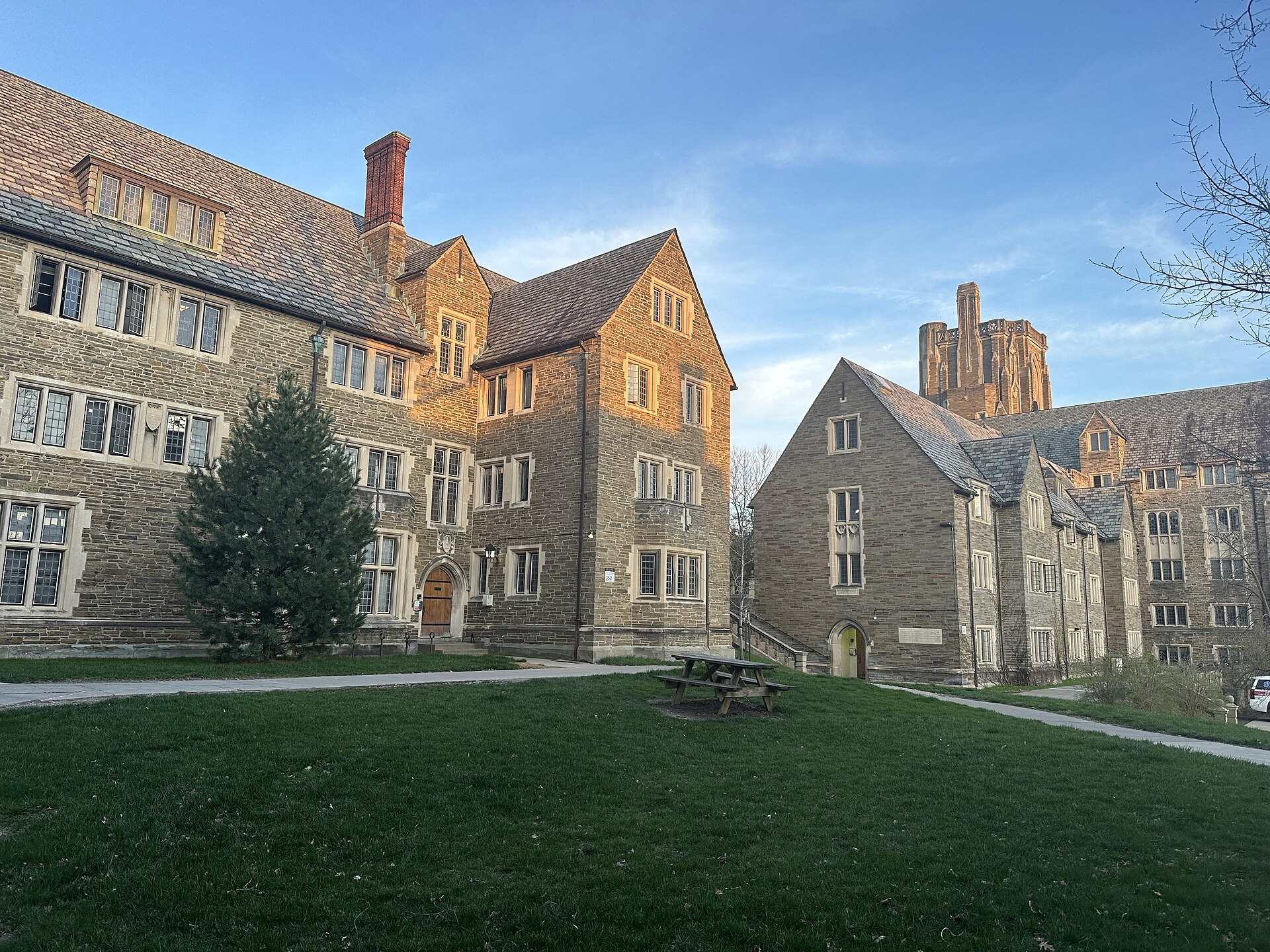
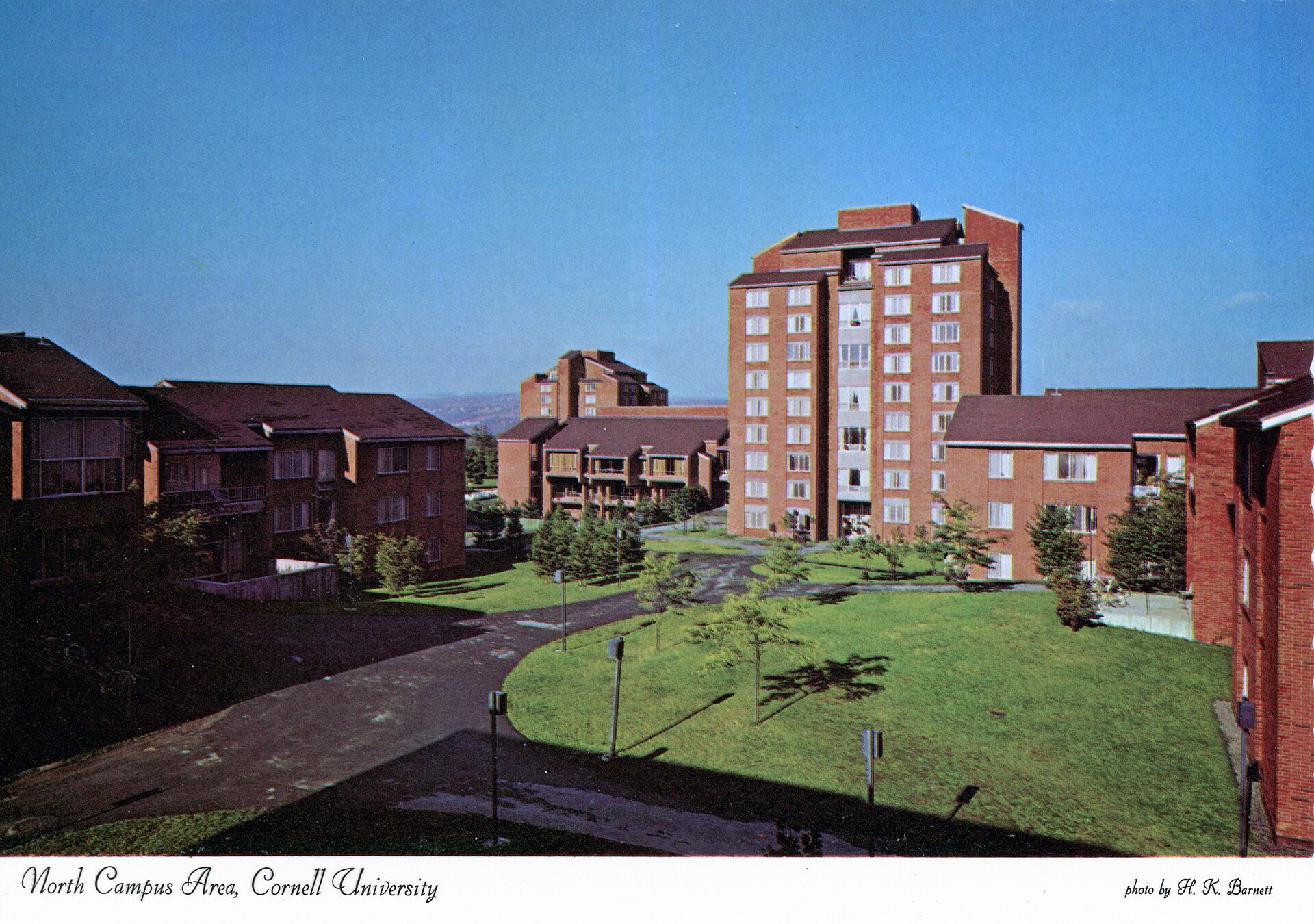




Why Cornell — Ivy League Breadth, Research Depth & Global Network
Cornell is the only Ivy League university where you can study hotel administration, agricultural science, industrial relations, architecture, or veterinary medicine alongside computer science and economics — all at the same level of intellectual rigour. For ambitious international students who know what they want to study, Cornell offers a combination of prestige, specialisation, and research access that no other Ivy can match.
Cornell Acceptance Rate & Admitted Class Profile
Stats
Profile Stats
Rea Vs Rd
Cornell Admissions Requirements — Academics, College Choice & Profile
- Most admitted students: 3.8+ unweighted GPA
- Course rigour matters as much as the grade
- All-A or equivalent record in advanced courses expected
- Teacher recommendations validate academic character and intellectual engagement
- Cornell superscores SAT across multiple sittings
- ACT: single highest composite sitting reported
- TOEFL/IELTS/Duolingo required for non-native speakers
- No preference between SAT and ACT
- IB: 41+ points, 6s and 7s at Higher Level
- A-Levels: AAA minimum; AAA* competitive for top colleges
- CBSE/ISC: 95%+ in relevant subjects
- National competition results and research strengthen the profile
Cornell Application Components — Common App, Essays & College-Specific Requirements
Cornell accepts the Common Application. Unlike many universities, Cornell requires applicants to select one of its nine undergraduate colleges or schools, and each college has its own supplemental essay and, in some cases, additional short-answer questions. Below is every component of a complete Cornell application.
Cornell Essays — Writing the Community Essay & College Supplement
Prompts
Tips
What Cornell Admissions Officers Are Looking For
Cornell uses a holistic review process conducted by the admissions office of each individual college. Every application is read in the context of the specific college applied to — its curriculum, culture, and the type of student who thrives there. Understanding what each college values is the foundation of a strong Cornell application strategy.
Cornell Financial Aid & Scholarships for International Students
Cornell meets 100% of demonstrated financial need for all admitted undergraduate students — domestic and international. However, unlike Harvard, Princeton, and MIT, Cornell's admissions process for international students is need-aware: financial need is one factor considered in the admissions decision. Once admitted, aid packages combine Cornell grants, a work-study component, and in many cases a modest student loan expectation.
Aid packages are determined individually based on the CSS Profile assessment. International students should apply for aid at the time of application — Cornell does not allow aid applications to be submitted after admission for international students.
Stats
Contribution Tiers
| Range | Percent | Percent Value | Note |
|---|---|---|---|
| Cornell Grant | Core grant covering the largest portion of need | 70 | Gift aid — does not need to be repaid |
| Work-Study | Expected annual student employment earnings | 15 | Earned through on-campus employment |
| Student Loan | Modest loan expectation depending on family income | 15 | Varies; lower-income students may have $0 loan |
Key Dates
Advantages
- Meaningfully higher acceptance rate (~18–20% ED vs ~5–6% RD)
- Signals genuine first-choice commitment to a specific Cornell college
- Earlier decision — mid-December notification reduces anxiety
- Demonstrated interest signals align with college-fit evaluation
- More holistic review with a less-pressured applicant pool
Disadvantages
- Binding commitment — you must withdraw all other applications if admitted
- Cannot compare financial aid offers from other schools
- Application must be complete and strong by November 1 — less time to strengthen
- International students on aid must submit CSS Profile by November 1 (ED) or January 2 (RD)
- If deferred to RD, you may wait until April without other early commitments
Cornell Interview — Policy, Format & What to Expect
Cornell does not conduct formal evaluative interviews as part of its undergraduate admissions process. Unlike Harvard's alumni interview programme, there is no standard interview for Cornell applicants. Some Cornell college-specific situations (such as certain architecture portfolio reviews or scholarship programmes) may involve a conversation, but the standard undergraduate application does not include an interview component. Your written application — essays, recommendations, and transcripts — carries the full evaluative weight.
Meta
Questions
Cornell's Residential System — North Campus to the West Campus Houses
Cornell does not have the Harvard-style residential house system, but it has a structured residential progression that shapes the undergraduate experience profoundly. All first-year students live on North Campus — a distinct residential community that forms the social foundation of the Cornell experience. From sophomore year, students can move into the West Campus House System or choose from a range of themed programme houses and residential halls.
Houses
Lottery Steps
- First-year students: all guaranteed North Campus housing — a close-knit community that forms class bonds
- Sophomore year: applications open for West Campus House System (each House has its own character and faculty-in-residence)
- Each West Campus House has its own dining hall, common rooms, and academic programming
- Programme houses provide theme-based communities for students with specific cultural or academic interests
- Off-campus housing in Ithaca is available from sophomore year — affordable relative to urban university peers
Cornell's Nine Undergraduate Colleges & Schools
- {"label":"Majors available","value":"70+"}
- {"label":"When concentration declared","value":"Year 2"}
- {"label":"College type","value":"Private endowed"}
- {"label":"Essay requirement","value":"650 words"}
- {"label":"Engineering disciplines","value":"14+"}
- {"label":"College type","value":"Private endowed"}
- {"label":"Essay format","value":"Multiple short prompts"}
- {"label":"Research centre access","value":"From Year 1"}
- {"label":"Flagship programmes","value":"AEM + Hotel Admin"}
- {"label":"College type","value":"Private endowed"}
- {"label":"Essay","value":"650 words"}
- {"label":"Nolan: world ranking","value":"Top 3 hospitality"}
- {"label":"Majors","value":"40+"}
- {"label":"College type","value":"Statutory (NY State)"}
- {"label":"Essay","value":"500 words"}
- {"label":"Research farms","value":"Multiple on-campus"}
- {"label":"College type","value":"Statutory (NY State)"}
- {"label":"Essay","value":"650 words"}
- {"label":"Common outcomes","value":"Law, HR, Consulting"}
- {"label":"Programme focus","value":"Work, organisations & society"}
- {"label":"College type","value":"Statutory (NY State)"}
- {"label":"Essay","value":"600 words"}
- {"label":"Focus","value":"Human wellbeing & society"}
- {"label":"Majors","value":"10+"}
Research & Extracurricular Opportunities at Cornell
Career Outcomes & Cornell Alumni Network
Cornell graduates are among the most recruited in the world — particularly in finance, technology, consulting, hospitality, veterinary medicine, and public policy. The Cornell network spans 250,000+ living alumni in 160+ countries, with especially dense concentrations in New York City's financial and tech sectors.
Stats
Categories
Our Cornell Admissions Track Record
Faqs
Can I apply to multiple Cornell colleges?+
No. You apply to one Cornell college only. If you are not admitted to your chosen college, Cornell will not automatically consider you for other colleges. Choose carefully — the college choice is the most important strategic decision in your Cornell application.
Can I transfer between Cornell colleges after admission?+
Yes, internal transfers between Cornell colleges are possible, though selective. The process varies by college — some transfers are straightforward in Year 1 or 2; others are highly competitive. Applying to your intended college from the start is always preferable to planning on transferring.
Is Cornell test-optional for international students?+
Yes. Cornell has maintained test-optional admission. International students are not required to submit SAT or ACT scores. TOEFL, IELTS, or Duolingo is still required to demonstrate English proficiency for non-native speakers, and those are separate from the optional standardised tests.
Does Cornell interview applicants?+
Cornell does not conduct standard evaluative alumni interviews for undergraduate admissions. The written application — essays, recommendations, and transcripts — carries the full evaluative weight. Some scholarship and honours programmes have interview stages for finalists.
How much financial aid does Cornell give to international students?+
Cornell meets 100% of demonstrated financial need for all admitted students. However, Cornell is need-aware for international students — meaning need is a factor in the admissions decision. Aid packages for admitted international students combine grants, work-study, and often a modest loan component. International students must apply for aid at the time of application.
Is the Cornell Early Decision rate much higher than Regular Decision?+
Yes, meaningfully so. The ED acceptance rate is typically 18–20%, versus approximately 5–6% for Regular Decision. For applicants who are genuinely committed to Cornell and have a complete application by November, ED provides a significant statistical advantage.
What is the difference between Cornell's statutory colleges and its private endowed colleges?+
Cornell's statutory colleges (CALS, ILR, Human Ecology, and the Law School at the graduate level) are part of the State University of New York system, funded partially by New York State. For New York State residents, statutory college tuition is significantly lower. For international students, tuition is similar across all colleges, though still somewhat lower at statutory colleges.
What IB score is competitive for Cornell?+
The IB typical score for admitted Cornell students is 41+, with competitive candidates typically showing 6s and 7s at Higher Level. For the most selective Cornell colleges (Engineering, Dyson AEM), 42–44 with strong HL scores in relevant subjects is expected. Below 38 makes a competitive Cornell application significantly harder.
Book a Free Cornell Admissions Strategy Session
In 60 minutes our Cornell admissions specialists will evaluate your academic profile, help you choose the right Cornell college for your goals, develop your community and college-specific essay strategy, and determine whether Early Decision is right for your situation.
- No commitment required
- Cornell college selection strategy
- Essay review and development support
- Financial aid guidance for international applicants
Cornell Academic Requirements
Cornell Academic Requirements — The Honest Breakdown for International Students
What GPA, SAT/ACT, IB, and A-Level scores do Cornell's admitted students actually have? And how does Cornell's college-by-college holistic review evaluate academic profiles from IB, A-Level, AP, and other international curricula?
GPA & Class Rank
Cornell and GPA — What the Data Shows
Cornell does not publish a minimum GPA requirement. In practice, the vast majority of admitted students have a 3.8 unweighted GPA or higher, with most sitting at 4.0 or above in the US context. Cornell's admissions process is college-specific, and the competitive academic threshold varies somewhat by college — Engineering and Dyson AEM are among the most selective.
A 3.8 GPA is the competitive floor, not a distinguishing feature. What distinguishes admitted Cornell students is the combination of strong grades, rigorous course selection, and demonstrated intellectual engagement in their intended field.
Academic Context
Class Rank and School Context — How Cornell Reads Academic Performance
Cornell does not require class rank, and many international schools do not provide it. Cornell's admissions office evaluates academic performance within the context of each applicant's specific school — using the school profile submitted by the counsellor through the Common Application.
Standardised Testing
SAT Scores at Cornell — What You Actually Need
Cornell SAT Data — Admitted Applicants (test-submitting)
| Label | Score | Percent |
|---|---|---|
| 25th percentile | 1510 | 72 |
| 75th percentile | 1560 | 91 |
| Median (estimated) | ~1535 | 81 |
Standardised Testing
ACT Scores at Cornell — The Data and the Strategy
Cornell ACT Data — Admitted Applicants (test-submitting)
Metrics
Comparison Cards
Testing Strategy
Cornell Test-Optional — The Strategic Decision Explained
Cornell has maintained a test-optional policy since 2020. Understanding what this actually means — and when submitting or withholding scores is the right strategy — is important for every Cornell applicant.
Submit Items
Withhold Items
Curricula
A-Levels and IB at Cornell — Specific Benchmarks
- {"label":"Competitive range","value":"41+ points"}
- {"label":"HL expectations","value":"6–7 at Higher Level in subjects relevant to intended major"}
- {"label":"Subject rigour","value":"HL Mathematics (AA preferred for STEM/business), HL sciences for engineering, HL humanities for ILR/arts"}
- {"label":"Extended Essay","value":"A or B preferred; used as supplementary evidence of research capability and intellectual depth"}
- {"label":"Competitive range","value":"AAA minimum; AAA* for most selective colleges"}
- {"label":"Subject rigour","value":"Mathematics + Further Mathematics for STEM applicants; strong essay-based subjects for humanities-focused colleges"}
- {"label":"AS results","value":"Reviewed alongside predicted grades; strong AS performance supports the predicted grade argument"}
Advanced Placement
AP Courses at Cornell — What Counts and What to Take
For students in the US system or at schools that offer AP courses, Advanced Placement performance is a meaningful component of the academic profile at Cornell.
Academic Rigour
Rigour of Secondary School Record — Cornell's Primary Academic Factor
Cornell explicitly lists 'rigour of secondary school record' as one of the most important factors in its admissions process. Understanding what this means — and how to demonstrate it — is foundational to a competitive Cornell application.
Taking the most challenging courses available at your specific school, in the subjects most relevant to your intended Cornell college and major.
Academic Preparation
Preparation by College — What Cornell Expects
Cornell does not have universal prerequisite requirements — students are admitted to individual colleges with their own academic expectations. The preparation that matters depends significantly on which college you apply to.
Language Proficiency
English Language Requirements for International Cornell Applicants
Cornell requires non-native English speakers to demonstrate English proficiency through a standardised language test. Unlike Harvard, Cornell publishes minimum score thresholds.
Students whose entire secondary education was conducted in English may be exempt from submitting an English language test — Cornell has specific exemption criteria. Review the exemption policy on Cornell's official admissions site and confirm your eligibility before deciding whether to submit a test.
By College & Major
Academic Requirements by Cornell College — What Different Paths Expect
Cornell requires applicants to select a specific college. The academic preparation expected is college-specific, and the following outlines the typical profile by college. Applicants should align their course selection, activities, and essays to their chosen college.
| Concentration | Expectation | Signals |
|---|---|---|
| Engineering (Cornell COE) | HL Maths AA / Further Maths A* | AMC/AIME; USACO; technical projects; research |
| Computer Science (COE/CIS) | HL Maths + CS experience | USACO; GitHub portfolio; original software projects |
| Dyson AEM (SC Johnson) | HL Maths AA + Economics | Quantitative projects; entrepreneurship; economic research |
| Hotel Administration (Nolan) | Strong academics + industry experience | Hospitality work; business interest; leadership |
| ILR | Strong social science + writing | Policy research; advocacy work; union/HR engagement |
| CALS | Biology + relevant sciences | Agricultural/environmental research; science fair |
| Arts & Sciences | Breadth + depth in chosen area | Research; writing competitions; subject Olympiads |
| Human Ecology | Social science + sciences blend | Interdisciplinary projects; health/design engagement |
| Architecture (AAP) | Arts + mathematics; portfolio | Design portfolio; spatial reasoning; creative projects |
International Systems
Cornell and International Education Systems — How Your Curriculum Is Evaluated
Roadmap
Building an Academic Profile for Cornell — What to Do at Each Stage
- Select IGCSE/MYP subjects that leave the widest options for IB or A-Level, with particular attention to mathematics and sciences if considering Engineering or business.
- Begin exploring your intended Cornell college — read about its programmes, faculty, and students.
- Identify academic interests and pursue them beyond the curriculum through clubs, independent reading, and online courses.
- Select IB HL subjects or A-Level combinations that are coherent with your intended Cornell college — Engineering needs HL Maths AA and sciences; ILR needs strong social sciences; Dyson needs HL Maths and Economics.
- Begin SAT or ACT preparation if applying to US universities.
- Identify relevant summer programmes, internships, or research opportunities in your intended field.
- Build the specific extracurricular commitment that will become your core application story.
- Pursue substantive work in your intended field — research, work experience, competitions, or independent projects.
- Maintain strong academic performance; Cornell's admissions team reviews mid-year reports.
- Begin researching specific Cornell faculty, courses, research centres, and student organisations that connect to your interests.
- Draft preliminary college-specific essay ideas — this essay requires deep knowledge of your chosen Cornell college.
- Predicted grades finalised — your IB or A-Level predicted grades inform Cornell's academic assessment.
- SAT/ACT completed if submitting.
- College-specific essay drafted, reviewed, and refined to show specific, credible knowledge of the Cornell college.
- Full application submitted November 1 (ED) or January 2 (RD). Financial aid CSS Profile required by the same deadline for international students seeking aid.
Common Pitfalls
Academic Mistakes That Cost Cornell Applications — And How to Avoid Them
Real Outcomes
What Academic Profiles TYCHR's Cornell-Admitted Students Had
The following profiles represent the academic backgrounds of students TYCHR has helped gain Cornell admission or Cornell-equivalent outcomes. They illustrate the range of academic preparation that works — and what made each application compelling.
Faqs
What IB score do I need for Cornell?+
Competitive Cornell applicants typically have predicted IB scores of 41–44, with 6s and 7s at Higher Level in subjects relevant to their intended college. For the most selective colleges (Engineering, Dyson AEM), 42+ with strong HL scores in relevant subjects is expected. Scores below 38 significantly reduce competitiveness.
Does Cornell prefer SAT or ACT?+
No preference. Take the test you score higher on — take a diagnostic of both before committing. Cornell superscores the SAT.
Can I apply to Cornell without test scores?+
Yes. Cornell is test-optional. For international students, TYCHR generally recommends submitting strong scores (1510+ SAT, 33+ ACT) rather than going test-optional, as scores provide a standardised benchmark that complements international transcripts. TOEFL/IELTS/Duolingo is still required for non-native English speakers.
Does a 4.0 GPA guarantee admission to Cornell?+
No. Cornell receives applications from thousands of students with 4.0 GPAs or equivalent. The academic profile must combine strong grades with rigorous course selection, demonstrated intellectual engagement in the intended field, and specific fit with the chosen Cornell college.
How does Cornell evaluate Indian board (CBSE/ISC) applicants?+
Indian board grades are contextualised carefully. Cornell is aware of the Indian school system's grading norms. Supplementary evidence — JEE performance, science Olympiad results, or research experience — significantly strengthens an application from a CBSE or ISC student.
Cost & Financial Aid
Cornell's Sticker Price Is High — Here's What International Students Actually Pay.
Cornell meets 100% of demonstrated financial need for all admitted students, including internationals. The real cost depends on your family's financial situation and the aid package you receive. Here is the honest breakdown: what Cornell costs, how aid works, and what international students need to know.
Cost Transparency
What Cornell Actually Costs — The Full Annual Figure
Cornell's published cost of attendance of approximately $99,734 is the number families with no financial aid pay. For admitted students with demonstrated financial need, the actual cost can be substantially lower. The aid calculation is based on the CSS Profile assessment of family income and assets — not the sticker price.
Admissions Policy
Cornell's Need-Aware Policy for International Students — What It Means
Once admitted, Cornell meets 100% of demonstrated financial need for all students, including international students. The aid package is determined by the CSS Profile assessment of family financial circumstances.
Institutional Commitment
Why Cornell Provides Comprehensive Aid — The Endowment and the Mission
Financial Aid Walkthrough
Applying for Cornell Financial Aid — The Process Step by Step
Cornell financial aid is not automatic — it requires a separate application through the CSS Profile. For international students, this application must be submitted by the same deadline as the admissions application. There is no option to defer the aid application.
- Access cssprofile.collegeboard.org
- Log into or create a College Board student account
- Parent income from all sources (employment, investments, rental income)
- Parent assets (savings, investments, real estate, business interests)
- Student income and assets
- Household size and number of family members in college
- Any unusual financial circumstances (medical expenses, natural disasters)
- {"label":"Early Decision Applicants","date":"November 1"}
- {"label":"Regular Decision Applicants","date":"January 2"}
Global Admissions Aid
Cornell Financial Aid for International Students — How It Works
Cornell's financial aid programme for international students is one of the most comprehensive in the US, subject to important distinctions from Harvard and Princeton. Here is what international students need to understand.
Financial Aid Calculations
Cornell Financial Aid — What to Expect by Income Level
Illustrative Guidance: Cornell Aid for International Students
The following is qualitative guidance only. Cornell's actual aid amounts are determined individually through the CSS Profile assessment. Individual circumstances vary significantly. Use Cornell's Net Price Calculator for a personalised estimate.
For families with demonstrated financial need below approximately $100,000/year, Cornell's aid programme meaningfully reduces the cost of attendance. For higher-income families, the sticker price is closer to the real price. The key difference from Harvard is that Cornell's packages include loans and the admissions process is need-aware for international students.
| Income | Grant | Contribution |
|---|---|---|
| Under $60,000 | Substantial Cornell grant; low or zero loan; modest work-study | Very low — significant need typically met through grants |
| $60,000–$100,000 | Meaningful Cornell grant; modest loan; work-study expected | Moderate contribution expected alongside grant support |
| $100,000–$150,000 | Partial grant; standard loan component; work-study | Larger family contribution alongside partial grant |
| $150,000–$200,000 | Smaller or no grant; loans and work-study form most of package | Substantial family contribution typically expected |
| Above $200,000 | Minimal or no institutional grant | Full or near-full cost of attendance expected from family |
Table Headers
Qualification Criteria
Cornell Scholarships — What Exists and Who Qualifies
Cornell's undergraduate financial aid is primarily need-based — awarded based on demonstrated financial need rather than academic achievement alone. However, Cornell operates several named scholarship programmes for specific international student populations, and a small number of merit-adjacent awards are available.
External Funding
External Scholarships — Additional Funding for Cornell Students
While Cornell's own aid programme is need-based, numerous external organisations award scholarships to Cornell students, providing additional funding that can supplement the Cornell grant.
Loan Policy
Cornell's Loan Policy — What to Expect
Unlike Harvard, Princeton, and MIT, which have eliminated loans from their financial aid packages, Cornell's aid packages for most students include a modest student loan expectation. Understanding this difference is important for families comparing Ivy League financial aid offers.
Student Employment
Work-Study at Cornell — What to Expect
Cornell financial aid packages typically include a student employment (work-study) component — an expected contribution from part-time on-campus or approved off-campus employment, generally $2,500–$3,000/year.
- Research assistant positions in faculty labs (valued for both income and research experience)
- Library and administrative roles
- Cornell Dining services
- Academic tutoring and writing centre support
- Campus tour guide and admissions ambassador
- Computing and IT support services
Benchmarking
Cornell vs. Other Ivies — Financial Aid Comparison
| School | Policy | No Loans | Typical Cost |
|---|---|---|---|
| Harvard | Need-blind (intl) | Yes | $0 (low income) |
| Princeton | Need-blind (intl) | Yes | $0 (low income) |
| MIT | Need-blind (intl) | Yes | $0 (low income) |
| Yale | Need-aware (intl) | Minimal (low income) | ~$5,000–$15,000 |
| Cornell | Need-aware (intl) | No — loans included | Varies; loans included |
| Dartmouth | Need-aware (intl) | No | ~$10,000–$20,000 |
| Columbia | Need-aware (intl) | No | ~$10,000–$20,000 |
| Brown | Need-aware (intl) | No | ~$8,000–$18,000 |
| UPenn | Need-aware (intl) | No | ~$10,000–$25,000 |
Cost Analysis
Cornell vs. Alternatives — What You Actually Pay
For a family earning $75,000/year, Cornell's substantial grant support can reduce the real cost of attendance dramatically below the sticker price — though not to zero as at Harvard. For most international families in this income range, Cornell's real cost is still significantly lower than UK Russell Group or US public university alternatives.
| School | Policy | Contribution | Four Year Cost |
|---|---|---|---|
| Harvard | Need-blind, full-need, no loans | ~$0 | ~$0 |
| Princeton | Need-blind, full-need, no loans | ~$0 | ~$0 |
| Cornell | Need-aware, full-need, loans included | Low-to-moderate + small loan | ~$5,000–$30,000 |
| Yale / Columbia / Brown | Need-aware, full-need, minimal loans | Low-to-moderate | ~$20,000–$60,000 |
| UK Russell Group (London) | Limited international aid | ~$30,000–$40,000/year | ~$120,000–$160,000 |
| US top public (out-of-state) | Limited international aid | ~$30,000–$45,000/year | ~$120,000–$180,000 |
Financial Appeals
Appealing a Cornell Financial Aid Decision — When and How
Cornell's initial financial aid offer is based on the CSS Profile information submitted at application. If your family's circumstances have changed or if the initial offer does not accurately reflect your situation, Cornell has a formal appeals process.
Cornell's financial aid formula is already generous relative to most universities. Appeals are most successful when based on a genuine change in circumstances, a clear error in the CSS Profile, or a significantly different offer from a peer institution — not simply on disagreement with the initial formula.
When To Appeal
- Family financial circumstances have changed since the CSS Profile was submitted (job loss, medical expenses, natural disaster, business failure)
- The CSS Profile contained an error or omission
- The initial offer seems inconsistent with your family's actual financial situation
- Another university has offered substantially different aid for a comparable financial profile
How To Appeal
- Contact Cornell's Student Financial Services office directly
- Submit a written appeal explaining the specific circumstances and the grounds for the appeal
- Provide supporting documentation (income verification, medical bills, job loss documentation, or other relevant records)
- If comparing with another university's offer, provide a copy of that offer letter
Timeline & Planning
Planning for Cornell Costs — What to Do and When
Admissions Strategy
Cornell Essays — Everything You Need to Know to Write Them Well.
Cornell's essay requirements are college-specific — the most important essay in your application is written directly for the college you are applying to. Here is a complete guide to Cornell's writing requirements, what each college is looking for, and the specific strategies that produce essays admissions officers remember.
Requirement Overview
Cornell Essay Requirements — The Full Picture
Cornell's application uses the Common Application. The writing supplement has two components: a university-wide community essay (350 words, required for all applicants), and a college-specific essay that varies significantly by college. Unlike most Ivy League universities, Cornell's supplemental essays are highly targeted to the individual college — which means writing a strong Cornell supplement requires deep, specific knowledge of the college you have chosen.
Required Items
Optional Items
Current Essay Prompts
Cornell 2025–2026 Essay Prompts — All Colleges
The 650-Word Anchor
The Common App Essay at Cornell — What It Needs to Accomplish
The Common App personal statement is your primary tool for conveying who you are as a person — your character, intellectual identity, and authentic voice. It goes to every school on your list, including Cornell. At Cornell, where the college-specific essay handles the 'fit' question, the personal statement handles the 'who are you?' question.
The Common App personal statement must serve every school on your list. Write it to reveal your character and intellectual identity authentically — not to perform qualities you think Cornell wants. The college-specific essay handles Cornell's specific fit; the personal statement handles who you are.
Looking For List
- A genuine, distinctive perspective on something the student cares about — specific enough that it could only come from this applicant
- Evidence of how the student's mind works: not what they achieved, but how they think, question, and engage
- Authentic voice: the essay should sound unmistakably like the person who wrote it
- Intellectual or personal character that is not captured in the activity list, grades, or recommendations
Tired Of List
- Essays that narrate the activity list in prose form — the reader already has the activity list
- Generic challenge-and-growth narratives without genuine insight or specificity
- Essays that name-drop Cornell or try to do the job of the college supplement
- Opening with a famous quote, a dictionary definition, or a rhetorical question
College-Specific Strategy
Cornell Supplement Strategy — How to Write for Each College
Creative Strategy
Choosing Your Essay Topics — The Decision That Shapes Everything
The personal statement topic and the community essay topic are two distinct creative decisions, each requiring its own strategy. The college-specific essay topic is constrained by the prompt but shaped by your research depth into the college.
Criteria
Caution Topics
- Sports injury and the lessons of perseverance — extremely common, rarely revealing
- Mission trip transformation — common; often reflects on the writer rather than the community
- Generic 'Why Cornell?' essays that could be submitted to any research university
- Any topic where the primary goal is to impress rather than to reveal
Common Pitfalls
Cornell Essay Mistakes That Cost Applications — And How to Avoid Them
- Writing a generic college essay that does not demonstrate specific knowledge of the Cornell college applied to — the most common and most costly Cornell essay mistake
- Treating the community essay as a diversity statement — it asks about formation and influence, not demographic identity
- Repeating content from the activity list in the personal statement instead of revealing something genuinely new
- Applying to the wrong Cornell college and writing an incoherent college essay that does not match the applicant's academic profile
- Writing a college essay that is really about Cornell generally ('Ivy League prestige,' 'research university atmosphere') rather than the specific college's curriculum and community
- Using AI-generated or generic language that removes the student's authentic voice — Cornell's readers are experienced at identifying essays that do not sound like the applicant
- Submitting the same college essay to multiple Cornell colleges if transferred between applications — each essay must be written specifically for one college
Essay Strategy FAQs
Cornell Essay FAQs
How important is the college-specific essay compared to the Common App essay?+
At Cornell, the college-specific essay is the most important piece of writing in your application — read by the specific college's admissions staff who know their field in depth. The Common App essay is important for establishing your personal character, but the college essay drives the 'fit' assessment. Both must be strong, but invest disproportionately in the college essay.
Should I mention specific Cornell professors or courses in my essay?+
Yes — with specificity and accuracy. Naming a specific professor's research, a distinctive course, or a particular research centre demonstrates genuine engagement with the college's academic community. However, named references must be accurate and relevant — citing a professor's research that does not connect to your stated interests is worse than not citing anyone.
How should I approach the community essay if my most meaningful community is my family?+
Family is a valid community for this essay, but it is also common. If you choose family, the essay must show the specific mechanism of influence — how your family's particular dynamic, values, or experience shaped how you think — not a general statement about family importance. The more specific and honest the detail, the stronger the essay.
Can I reuse my Common App essay for the Cornell supplement?+
No. The Common App essay is a personal statement about who you are; the Cornell college essay is a targeted response to a specific prompt about your fit with a specific college. They serve entirely different functions and must be written separately.
How much does the essay matter if my grades and test scores are strong?+
At Cornell, the essay matters significantly more than at many universities because it directly evaluates fit with the specific college — a dimension that grades and test scores do not address. Strong academic credentials without a compelling, specific college essay frequently result in rejection at Cornell's most selective colleges.
What word count should I aim for within the limit?+
Aim for 90–95% of the limit. A 650-word essay at 640 words is fine. An essay significantly shorter than the limit (under 70%) raises questions about whether you have fully engaged with the prompt. Never exceed the limit — it signals poor editing.
Is it better to apply to a less competitive Cornell college to improve my odds?+
Only if that college is genuinely right for you. Cornell's admissions process is college-specific — an Engineering applicant switching to CALS to reduce competition will produce an incoherent application if their interests and profile are clearly engineering-oriented. The college essay will expose the mismatch. Apply to the college that is right for your genuine academic goals.
How does Cornell evaluate essays from non-native English speakers?+
Cornell expects competent academic English. For non-native speakers, TOEFL/IELTS/Duolingo scores are required and serve as a baseline. The essays themselves are not evaluated with a different standard — they should demonstrate clear, precise academic writing. TYCHR's essay coaching includes specific support for non-native English writers, focused on voice authenticity and academic clarity.
Courses — schools, degrees & intake
19 degrees across 6 groupings.
College of Arts & Sciences · 4 degrees
Computer Science
Economics
Biological Sciences
English
Cornell David A. Duffield College of Engineering · 4 degrees
Computer Science
Mechanical Engineering
Electrical and Computer Engineering
Operations Research and Engineering
Cornell SC Johnson College of Business · 2 degrees
Applied Economics and Management (AEM)
Hotel Administration
College of Agriculture and Life Sciences (CALS) · 4 degrees
Animal Science
Agricultural Sciences
Biological Sciences
Plant Sciences
College of Human Ecology · 4 degrees
Human Development
Nutritional Sciences
Design + Environmental Analysis
Human Biology, Health + Society
School of Industrial and Labor Relations (ILR) · 1 degrees
Industrial and Labor Relations
Want your real chances at Cornell University?
Create a free TYCHR account for your personalised admit-chance, a shortlist you can track, exact entry requirements, and essay + counselling help.