Imperial College London
London, United Kingdom · Urban
Gaining a place at Imperial demands more than exceptional grades — it demands demonstrated passion, scientific rigour, and a profile built for one of the world's most technically elite universities.
Campus
Imperial College London — campus in pictures
Real, freely-licensed photographs of the campus (via Wikimedia Commons).


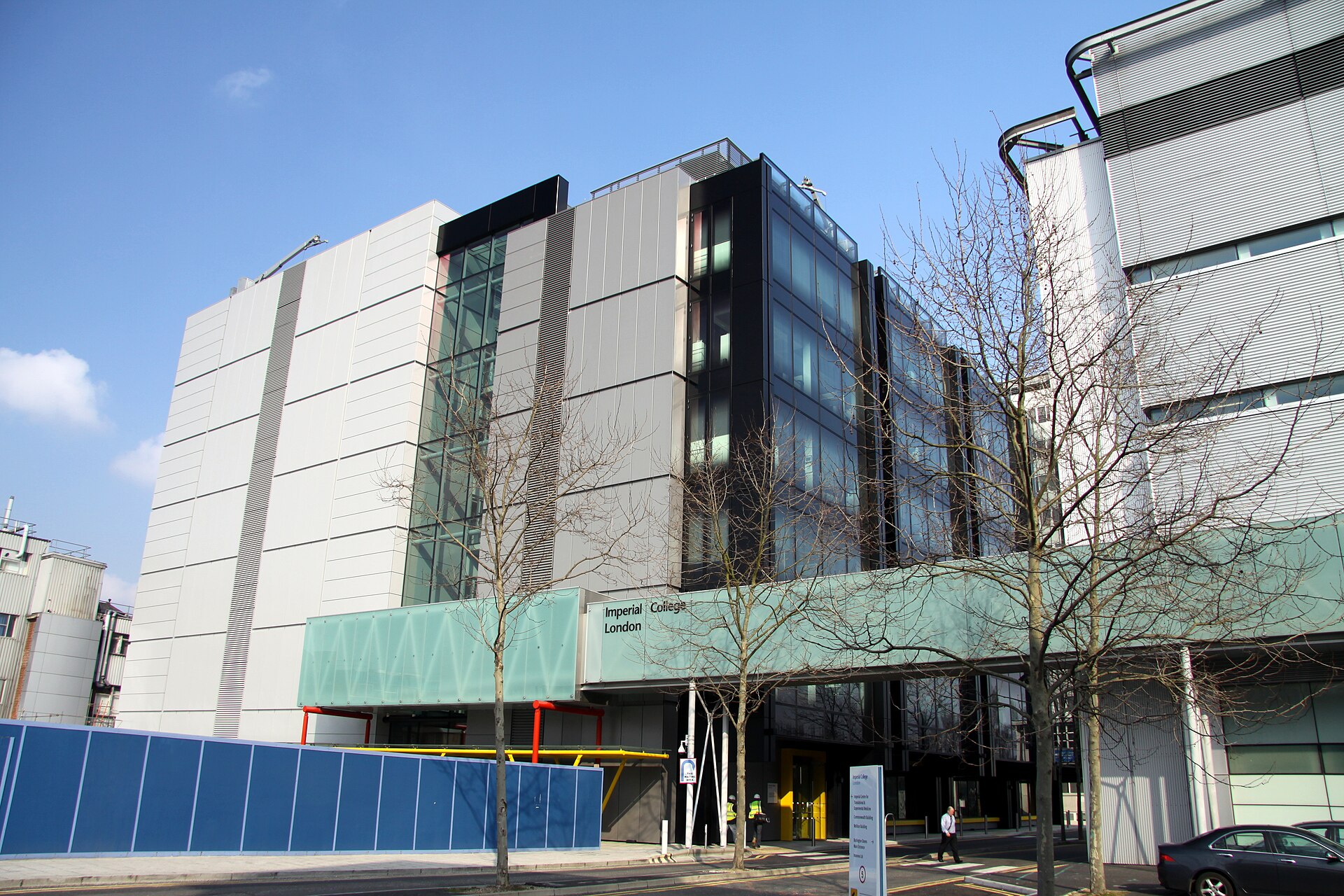
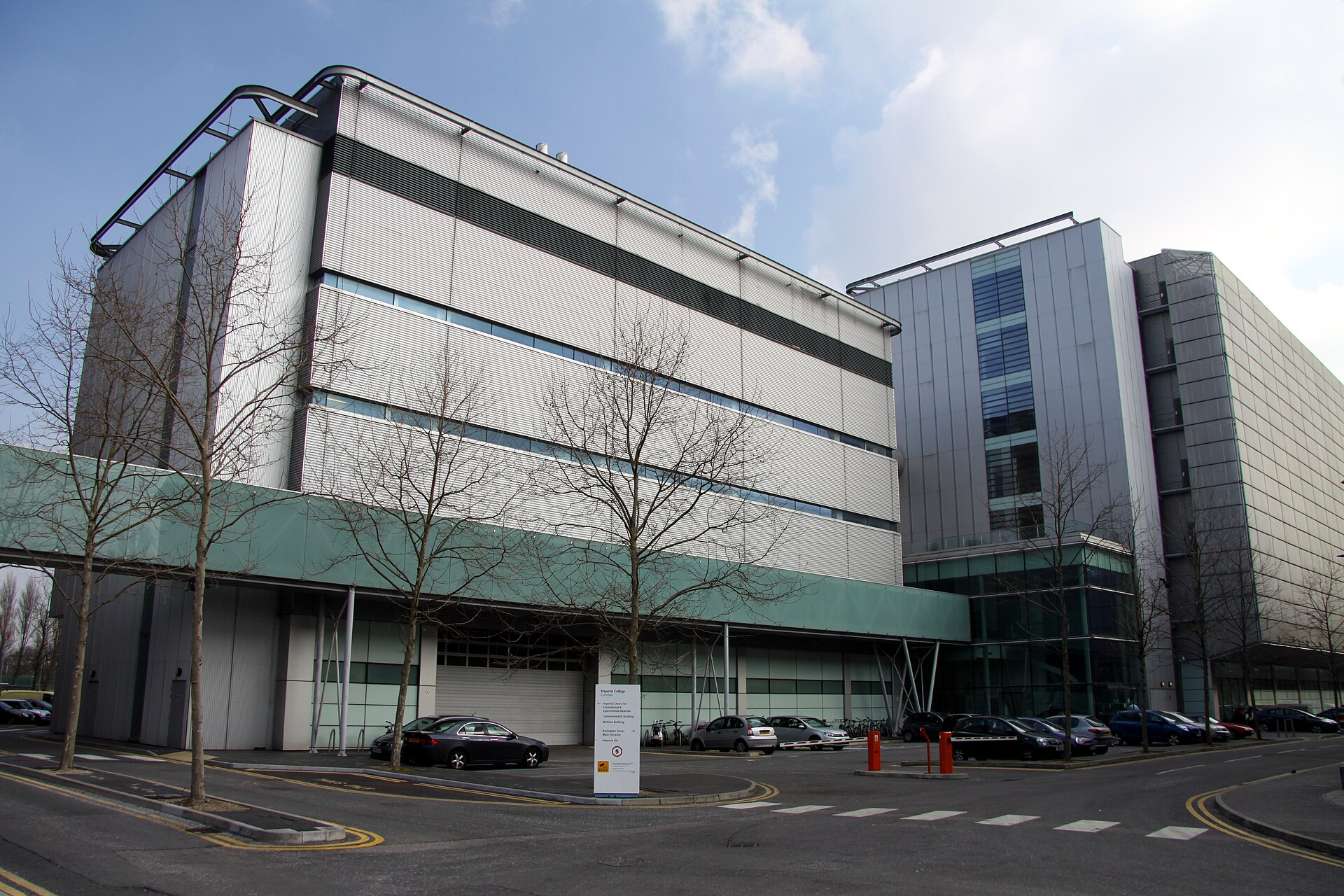


Why Imperial College London — London, STEM Excellence & Global Reach
Imperial College London is not a general university — it is one of the world's leading specialist institutions in science, engineering, medicine, and business. Founded in 1907 by royal charter, it has grown into a G5 research powerhouse that combines the rigour of the best STEM education in the UK with the professional and cultural advantages of a central London location.
Imperial College London Acceptance Rate & Admitted Student Profile
Stats
Profile Stats
Rea Vs Rd
Imperial Admissions Requirements — Grades, Admissions Tests & English Language
- A-Level: typically A*A*A to A*A*A* depending on course
- IB: 40–42 points minimum, 7s in relevant Higher Level subjects
- Mathematics A* (or IB HL Maths 7) required for most STEM courses
- Subject-specific requirements vary significantly by department
- ESAT: Engineering and Science Admissions Test (most engineering courses)
- TMUA: Test of Mathematics for University Admissions (Mathematics)
- UCAT: University Clinical Aptitude Test (Medicine)
- Admissions tests are used to differentiate between high-achieving applicants
- IELTS: 6.5 overall (with no component below 6.0)
- TOEFL iBT: 92 overall
- Duolingo English Test: 125
- Required for all applicants whose first language is not English
Imperial Application Components — UCAS, Personal Statement & Admissions Tests
Imperial applies through UCAS — the UK's centralised university admissions service. The application is different in almost every way from the US Common App system. There are no 'supplemental essays', no recommendation letters in the US sense, and no test-optional policy.
Imperial Personal Statement — Writing the UCAS Three-Question Statement
Tips
Prompts
What Imperial Admissions Tutors Are Looking For
Imperial uses a holistic but heavily academic evaluation process. Unlike the US Ivy League, personal character, diversity, and community contribution play a secondary role. The primary evaluation is academic: grades, test performance, and demonstrated engagement with the subject.
Imperial Financial Aid & Scholarships for International Students
Imperial's financial support for international undergraduate students is more limited than that of the top US universities. There is no equivalent to Harvard's need-blind, full-need aid programme. Most international undergraduates pay full tuition fees. A small number of merit-based scholarships are available through Imperial and through external bodies.
Imperial does not operate a need-blind or full-need financial aid model for international undergraduates. The figures shown represent tuition costs from the facts file. Scholarship values shown are from Imperial's official scholarship search. Aid availability is limited — plan financially accordingly.
Stats
Contribution Tiers
| Note | Range | Percent | Percent Value |
|---|---|---|---|
| £5,000/year for the duration of studies — for high-achieving IB applicants | IB Excellence Scholarship | £5,000/yr | 10 |
| Full tuition + £16,500 stipend/yr — engineering applicants from Bulgaria | Kolio Ficheto Scholarship | Full | 100 |
| £5,000 one-off or per year — open to home and overseas students | Ceres Scholarship | £5,000 | 10 |
| External UK government scholarship covering fees + living costs for master's study | Chevening Scholarship | Full | 100 |
Key Dates
Advantages
- Applying early (with a strong application) gives more time for admissions test preparation
- Medicine applicants must apply by 15 October — no exceptions
- Strong October applications for non-Medicine courses go into the same pool as January applications
- UCAS has no Early Action advantage for non-Medicine courses; all applications in the equal consideration pool are reviewed equally
Disadvantages
- Unlike US EA/ED, applying before January 13 gives no admissions advantage for non-Medicine courses
- Late applications (after 30 June) are handled through UCAS Clearing — not viable for competitive Imperial courses
- All five UCAS choices submit the same personal statement — optimise it for Imperial while ensuring it works for all five
Imperial Interview — Format, Questions & Preparation
Interviews are a central component of Imperial's admissions process for most departments. They are held November–February, and candidates who have demonstrated potential in their UCAS application and admissions test are invited. Medicine uses a Multiple Mini Interview (MMI) format; other departments typically use a panel of one or two academics. Mathematics does not currently conduct interviews.
Meta
Questions
Imperial Halls of Residence & Student Accommodation
Imperial does not have a 'house system' in the Oxford/Cambridge sense. All first-year undergraduate students are guaranteed a place in university-managed halls of residence, located primarily in or near the South Kensington campus. After first year, students typically move into private accommodation in West London.
Houses
Lottery Steps
- All first-year undergraduates are guaranteed a room in Imperial-managed accommodation
- Accommodation preferences are submitted after accepting a conditional or unconditional offer
- Halls range from catered (meals included) to self-catered
- Most South Kensington halls are a short walk from lecture theatres, libraries, and sports facilities
- After first year, students typically rent privately in London's West End, Notting Hill, or Earl's Court areas
Imperial Faculties & Key Departments
- {"label":"Departments","value":"9"}
- {"label":"Key programmes","value":"Aeronautics, Chemical Engineering, Computing, EEE, Materials, Mechanical Engineering"}
- {"label":"Admissions test","value":"ESAT"}
- {"label":"Typical A-Level offer","value":"A*A*A – A*A*A*"}
- {"label":"Departments","value":"5"}
- {"label":"Key programmes","value":"Mathematics, Physics, Chemistry, Life Sciences, Earth Science"}
- {"label":"Admissions tests","value":"TMUA (Maths), ESAT (Physics/Chemistry)"}
- {"label":"Typical IB offer","value":"40–42 with 7s in HL subjects"}
- {"label":"Undergraduate programme","value":"BSc Economics, Finance and Data Science"}
- {"label":"Programme length","value":"3 years"}
- {"label":"Career focus","value":"Finance, consulting, data science"}
- {"label":"Typical A-Level offer","value":"A*A*A including Mathematics"}
- {"label":"Flagship programme","value":"MBBS Medicine (6-year)"}
- {"label":"UCAS deadline","value":"15 October"}
- {"label":"Admissions test","value":"UCAT"}
- {"label":"Interview format","value":"Multiple Mini Interviews (MMI)"}
Research & Extracurricular Opportunities at Imperial
Career Outcomes & Imperial Alumni Network
An Imperial degree opens doors in STEM-adjacent industries worldwide. London's position as a global financial, tech, and biomedical hub means that Imperial graduates benefit from proximity to some of the world's most competitive employers — from their first year.
Stats
Categories
Our Imperial Admissions Track Record & Student Success Stories
Faqs
Does Imperial have a preference for A-Levels over IB?+
No formal preference. Both A-Levels and the IB Diploma are well understood by Imperial's admissions tutors. For IB students, a total score of 40+ with 7s in relevant Higher Level subjects is the competitive benchmark for most STEM courses.
Do I need to sit an admissions test to apply to Imperial?+
For most courses, yes. Engineering and science courses require the ESAT; Mathematics requires the TMUA; Medicine requires the UCAT. Check the specific requirements on your course page. Tests must be booked and sat before the relevant UCAS deadline.
Is there financial aid available for international undergraduate students at Imperial?+
Limited financial support is available. The most notable undergraduate scholarship for international students is the IB Excellence Scholarship (£5,000/year for high-achieving IB applicants). Imperial does not offer US-style need-based aid. Most international undergraduates pay full tuition fees.
Will I get an interview at Imperial?+
Most departments conduct interviews for shortlisted candidates, typically November–February. Interviews may be in-person or virtual. Medicine uses Multiple Mini Interviews (MMIs). The Mathematics department does not currently conduct interviews.
What is the UCAS personal statement character limit for 2026 entry?+
For 2026 entry onwards (under the new UCAS format), the personal statement has three questions with a maximum of 4,000 characters in total. Each section requires a minimum of 350 characters. The old 4,000-character free-text format has been replaced.
Can I apply to both Imperial and Oxford or Cambridge?+
Yes. Applying to Oxford or Cambridge does not restrict your UCAS choices for Imperial. You can include both on your UCAS form. Note that Oxford and Cambridge have their own 15 October UCAS deadline, which aligns with Imperial's Medicine deadline but not with non-Medicine courses.
What subjects does Imperial require at A-Level or IB?+
Mathematics is required for almost every Imperial undergraduate course. Physics is required for Engineering and Physics courses. Chemistry and Biology have specific requirements for Medicine and Life Sciences. Check the specific course page for requirements — they vary significantly by department.
What is Imperial's acceptance rate?+
Imperial's overall undergraduate acceptance rate is approximately 10.6%. This varies significantly by course — Medicine and Computing are considerably more competitive than the overall figure suggests. The acceptance rate does not account for contextual admissions adjustments.
Book a Free Imperial Admissions Strategy Session
In 60 minutes our Imperial admissions specialists will evaluate your academic profile, identify your ESAT/TMUA/UCAT preparation needs, develop your UCAS personal statement strategy across all three questions, and advise on whether your target course is realistic given your current profile.
- No commitment required
- Imperial specialists with insider knowledge
- Personalised strategy — not generic advice
Imperial Academic Requirements
Imperial College London Academic Requirements — The Honest Breakdown for International Students
What A-Level grades, IB scores, and admissions test results do Imperial's admitted students actually have? And how does Imperial evaluate academic profiles from IB, A-Level, and other international curricula?
Grades & Academic Standards
Academic Grade Requirements at Imperial — The Real Picture
Imperial College London does not use the US GPA system. Academic performance is evaluated through A-Level results, IB scores, or equivalent international qualifications. Imperial publishes course-specific grade requirements and makes conditional offers based on predicted grades.
Meeting the stated entry requirements is necessary but not sufficient at Imperial. Most applicants have predicted grades at or above the offer level. Admissions tests and, for most departments, interviews are the primary differentiators in a high-achieving pool.
Academic Context
How Imperial Reads International Academic Records
Imperial does not use class rank. Academic performance is evaluated on the basis of grades achieved in internationally recognised qualifications, contextualised by the school's known profile. Imperial's admissions team is experienced at reading international transcripts.
Standardised Testing
SAT Scores at Imperial — Not Required, But Here's What International Applicants Should Know
Imperial College London does not require SAT or ACT scores. These tests are not part of the standard UCAS application process in the UK. Imperial's equivalent differentiator for quantitative aptitude is the ESAT (Engineering and Science Admissions Test) or TMUA (Test of Mathematics for University Admissions).
| Label | Score | Percent |
|---|---|---|
| SAT required? | No | 0 |
| ESAT (Engineering/Science) | Required | 80 |
| TMUA (Mathematics) | Required | 80 |
Standardised Testing
ACT Scores at Imperial — Not Part of the UK Admissions System
The ACT is not required or expected by Imperial College London. UK university admissions, including Imperial, do not use US standardised tests as part of their standard evaluation process.
Metrics
Comparison Cards
Admissions Tests
Imperial's Admissions Tests — ESAT, TMUA, and UCAT Explained
Unlike US universities which have moved toward test-optional admissions, Imperial's admissions tests (ESAT, TMUA, UCAT) are REQUIRED for most courses — not optional. Understanding which test applies to your course and when to register is essential.
Submit Items
Withhold Items
Curricula
A-Levels and IB at Imperial — Department-Specific Benchmarks
- {"label":"Competitive range","value":"40–42 points overall"}
- {"label":"HL expectations","value":"7,7,6 or 7,7,7 in subjects relevant to your chosen course"}
- {"label":"Mathematics","value":"IB HL Mathematics: Analysis & Approaches (7) required for Engineering, Mathematics, Physics"}
- {"label":"Extended Essay","value":"Relevant EE subject is noted; A or B grade is expected"}
- {"label":"Engineering (general)","value":"A*A*A — A* in Mathematics required"}
- {"label":"Computing","value":"A*A*A — A* in Mathematics required"}
- {"label":"Medicine","value":"A*A*A — Chemistry required; Biology or Mathematics strongly recommended"}
- {"label":"Mathematics","value":"A*A*A — A* in Mathematics and Further Mathematics"}
Advanced Placement
AP Courses at Imperial — How They Are Evaluated
Imperial does not use AP examinations as a standard qualification route for UK-resident applicants. However, US-curriculum students (at international schools or applying from the United States) can be considered on the basis of AP scores alongside their high school transcript and ESAT/TMUA performance.
Academic Rigour
Subject Rigour at Imperial — Why What You Study Matters as Much as How Well
Imperial places significant weight on the rigour of the subject choices within a student's secondary school qualification. Taking the most challenging and relevant subjects available — not just achieving high grades — is a key signal of readiness for Imperial's demanding academic environment.
Choosing HL Mathematics AA, HL Physics, and HL Chemistry simultaneously — and excelling — is what distinguishes a competitive Imperial applicant from one who achieved the same IB total in easier subjects.
STEM Preparation
Mathematics and Science Preparation — What Imperial Expects
Imperial is exclusively a STEM and business university. There are no humanities faculties, no social science schools (except Economics and Business), and no arts programmes. The academic expectations are therefore uniformly high in mathematical and scientific reasoning.
Language Proficiency
English Language Requirements at Imperial for International Students
Imperial requires all students whose first language is not English to demonstrate English language proficiency through a formal test. Unlike US universities where the application essays serve partly as an English language demonstration, Imperial's English language requirement is assessed through a separate standardised test.
Meeting the minimum English language threshold (IELTS 6.5) is the floor, not the target. For competitive STEM programmes where the teaching is lecture-intensive and the assessments include complex written work, a higher level of English proficiency (IELTS 7.0+ or TOEFL 100+) will serve the student better during the programme.
By Course
Academic Requirements by Course — What Each Imperial Programme Expects
Imperial admits students to specific degree programmes — not to a faculty broadly. Entry requirements are set at the course level. The table below summarises typical requirements; confirm on the official course page.
| Signals | Expectation | Concentration |
|---|---|---|
| Competition maths; TMUA score 7+; mathematical olympiad | A*A*A (A* in Maths + FM) or IB 40+ with HL Maths AA 7 | Mathematics |
| Programming projects; British Informatics Olympiad; ESAT | A*A*A (A* in Maths) or IB 39+ with HL Maths AA 7 | Computing |
| ESAT; physics olympiad; research engagement | A*A*A (A* in Maths & Physics) or IB 40+ HL Maths 7 + Physics 7 | Physics |
| ESAT; engineering competition; design project | A*A*A – A*A*A* (A* in Maths) or IB 40–42 | Aeronautical / Mechanical Engineering |
| ESAT; chemistry olympiad; research interest | A*A*A (A* in Maths/Chemistry) or IB 40+ HL Chemistry 7 | Chemical Engineering / Chemistry |
| UCAT 2900+; clinical experience 60h+; empathy in MMI | A*A*A (Chemistry required) or IB 40+ HL Chemistry 7 | Medicine (MBBS) |
| Quantitative projects; data science experience; finance knowledge | A*A*A (A* in Maths) or IB 39+ HL Maths AA 7 | Economics, Finance & Data Science |
| Biological research; lab experience; science fair | A*A*A (Biology + Chemistry) or IB 40+ HL Biology 7 + Chemistry 7 | Life Sciences |
International Systems
How Imperial Evaluates International Education Systems
Roadmap
Building an Academic Profile for Imperial — What to Do at Each Stage
- Select GCSE/IGCSE subjects that keep all STEM pathways open: Mathematics, Physics, Chemistry, Biology at minimum.
- Aim for high grades in every subject — GCSE results are reviewed by Imperial's contextual admissions process.
- Identify your intended Imperial course early — A-Level or IB subject choices must align with the entry requirements for your target programme.
- Begin engaging with subject content beyond the syllabus: books, podcasts, online lectures, science competitions.
- Confirm A-Level or IB subject combination against Imperial's entry requirements for your specific course.
- Register for the relevant admissions test (ESAT, TMUA, or UCAT) — registration typically opens in September/October.
- Begin structured admissions test preparation: the ESAT and TMUA require content beyond the standard A-Level/IB syllabus.
- Seek out academic enrichment: UK Senior Mathematical Challenge, Physics Olympiad, Chemistry Olympiad — competition mathematics and science experience is a meaningful differentiator.
- Predicted grades are central to Imperial's conditional offer — work closely with teachers on realistic but aspirational predictions.
- Sit the admissions test (typically October/November of Year 13) and prepare thoroughly.
- Write the UCAS personal statement addressing all three questions with specificity and authenticity.
- Attend or prepare for an Imperial interview if invited (most departments, November–February).
- Medicine applicants must complete the UCAT and submit UCAS by 15 October.
- Imperial conditional offers are typically A*A*A or above — there is no grade averaging or rounding up.
- If grades meet or exceed conditions: place is confirmed automatically through UCAS.
- If grades fall short: contact Imperial's admissions team immediately — some flexibility may exist for borderline cases.
- UCAS Clearing is not a viable route for competitive Imperial courses — plan to meet offer conditions.
Common Pitfalls
Academic Mistakes That Cost Imperial Applications — And How to Avoid Them
Real Outcomes
What Academic Profiles Tychr's Imperial-Admitted Students Had
The following profiles represent the academic backgrounds of students Tychr has helped gain Imperial admission. They illustrate the range of academic preparation that works — and what made each competitive.
Faqs
Does Imperial require Further Mathematics at A-Level?+
For Mathematics and some engineering courses, Further Mathematics is required or very strongly recommended. For most engineering courses, Further Mathematics is not strictly required but is a significant advantage. Check the specific course page for the requirement.
What IB score do I need for Imperial Engineering?+
A competitive IB score for Imperial Engineering is typically 40–42 points, with 7 in HL Mathematics AA and 6–7 in at least one HL science. The total IB score matters less than the subject combination and HL grades.
Is the ESAT harder than A-Level Mathematics?+
Yes. The ESAT tests mathematical and scientific reasoning at a level beyond standard A-Level or IB content. It is designed to differentiate between students who all have predicted A*s. Preparation beyond the standard curriculum is required.
Can I apply to Imperial if I am doing the IB outside the UK?+
Yes. The IB Diploma is well-understood and respected by Imperial's admissions tutors, regardless of where it is studied. International applicants from IB schools worldwide are routinely admitted.
Does Imperial conduct interviews for all courses?+
Most departments conduct interviews for shortlisted candidates. Mathematics does not currently interview. Medicine uses Multiple Mini Interviews. Check the specific course page for the interview policy.
Fees & Funding
What Imperial College London Actually Costs International Students — The Full Picture
Imperial does not offer the US-style need-blind, full-need financial aid that a Harvard or Princeton provides. For most international undergraduates, the full tuition and living costs apply. Here is the honest breakdown of what Imperial costs, what funding exists, and how to plan.
Cost Transparency
What Imperial Actually Costs — The Full Annual Figure
The approximate $53,000 annual tuition reflects the international fee level from Imperial's facts data. Tuition varies by course — Medicine is higher, Mathematics is somewhat lower. Living costs in South Kensington, London, are among the highest of any UK university location.
Aid Policy
Imperial's Financial Aid Policy for International Students — An Honest Assessment
Unlike US Ivy League universities, Imperial does not operate a need-blind or full-need financial aid model for international undergraduates. The majority of international students pay full tuition fees. A small number of merit-based scholarships are available through Imperial and through external sources.
Institutional Context
Why Imperial's Aid Model Differs from US Universities
Funding Walkthrough
Applying for Financial Support at Imperial — Step by Step
Financial support at Imperial for international undergraduates is more limited than at major US universities. The process below outlines how to find and access what is available.
- Visit imperial.ac.uk/study/fees-and-funding/scholarships-search/
- Filter by level of study (Undergraduate), nationality (International/Overseas), and subject area
- Available to international students with strong IB Diploma results
- Worth £5,000/year for the duration of studies
- Apply through Imperial's scholarship portal after receiving your offer
- Chevening Scholarships (UK government — postgraduate only)
- Commonwealth Scholarships (for qualifying Commonwealth country students)
- Country-specific government scholarships (India: ICCR; UAE: government awards; China: CSC)
- Private foundation scholarships relevant to your field
- UK Student visa requires proof of funds to cover tuition fees for Year 1 plus living costs
- Evidence must typically show funds held for at least 28 consecutive days
- Bank statements, scholarship letters, or parental financial evidence are accepted
- Imperial's Student Financial Support team can advise on bursaries, emergency funds, and departmental awards not listed in the main scholarship search
- Email: finance@imperial.ac.uk (or check the current contact on imperial.ac.uk)
INTERNATIONAL FUNDING
Imperial Financial Aid for International Students — How It Works
International undergraduate students at Imperial are not eligible for UK government student loans (which are restricted to UK-resident students). Most international students fund their Imperial education through personal or family savings, country-of-origin government scholarships, or (for a small number) merit-based institutional awards.
AID LANDSCAPE
Imperial Financial Support for International Students — Honest Overview
Summary of Aid Available for International Undergraduates
Scholarship availability and values are confirmed on Imperial's official scholarship search. All figures are approximate and subject to change. Tuition and living cost figures are from Imperial's published data.
For the majority of international undergraduate students at Imperial, no institutional need-based financial aid is available. Funding must be secured through personal savings, family resources, or external (government/private) scholarships. Plan for the full annual cost of approximately $75,000 unless a specific scholarship has been awarded.
| Grant | Income | Contribution |
|---|---|---|
| £5,000/yr (IB Excellence) — where eligible | Any (merit-based) | ~£30,000–£52,000/yr in fees |
| Full tuition + stipend (Kolio Ficheto — Bulgarian Engineering students) | Nationality-specific | £0 |
| No institutional grant | Most international families | Full tuition fees annually |
Table Headers
SCHOLARSHIP LANDSCAPE
Imperial Scholarships — What Exists and Who Qualifies
Imperial's limited undergraduate financial support is merit-based, not needs-based. Awards are given on the basis of academic achievement — particularly IB scores and admissions test performance — not on family financial circumstances.
EXTERNAL FUNDING
External Scholarships for Imperial Students — Verified Sources
Given Imperial's limited institutional financial support for international undergraduates, external scholarships are the primary mechanism for reducing the cost of an Imperial education. The following are verified external funding sources.
LOAN POLICY
Student Loans at Imperial — What International Students Need to Know
International students at Imperial cannot access UK government student loans. This is a fundamental difference from the UK domestic student experience, where tuition fees are covered upfront by the government and repaid through income-contingent loans after graduation. International students must fund their education from personal, family, or external scholarship sources.
STUDENT EMPLOYMENT
Working While Studying at Imperial — Visa Rules and Practicalities
International students on a UK Student visa are permitted to work part-time during term time (typically up to 20 hours per week) and full-time during vacations. This is not a 'work-study' programme in the US sense — it is simply the UK visa work allowance. Imperial does not operate a formal work-study financial aid component.
- Research assistant or lab assistant positions (competitive; advertised through departments)
- Imperial College Union — student officer and student staff roles
- Library and administrative roles within Imperial
- London internship and part-time roles (finance, tech, consulting — London's employer base is unmatched)
- Tutoring (private tutoring in A-Level or IB subjects is common among STEM students)
BENCHMARKING
Imperial vs. Other Elite Universities — Financial Aid Comparison
| Policy | School | No Loans | Typical Cost |
|---|---|---|---|
| No UK government loans for internationals | Imperial College London | N/A (no institutional loans) | ~$75,000/yr |
| No UK government loans for internationals | University College London (UCL) | N/A | ~$65,000–$75,000/yr |
| No UK government loans for internationals | University of Cambridge | N/A (some Cambridge Trusts available) | ~$55,000–$65,000/yr |
| Need-blind, full-need, no loans | Harvard University | Yes — grant only | $0 (families under $85K) |
| Need-blind, full-need, no loans | MIT | Yes — grant only | $0 (families under $95K) |
| Need-blind, full-need, no loans | Princeton University | Yes — grant only | $0 (families under $100K) |
COST ANALYSIS
Imperial vs. Alternatives — What International Students Actually Pay
For a family earning $75,000/year, Harvard or MIT may genuinely cost $0–$5,000/year in total contribution — while Imperial charges approximately $53,000/year in tuition alone. For financially-sensitive international families, the US need-blind universities offer a significantly better financial deal than UK institutions. This is counterintuitive given UK university prestige, but it is the financial reality.
| Policy | School | Contribution | Four Year Cost |
|---|---|---|---|
| Full international fees | Imperial College London | ~$53,000/yr | ~$212,000 |
| Full international fees | UCL | ~$45,000–$55,000/yr | ~$180,000–$220,000 |
| Need-blind, full-need | Harvard (family income $75K) | ~$0–$5,000/yr | ~$0–$20,000 |
| Need-blind, full-need | MIT (family income $75K) | ~$0–$5,000/yr | ~$0–$20,000 |
FINANCIAL SUPPORT
Financial Hardship at Imperial — What Support Is Available
Imperial does not operate a US-style financial aid appeal process, because Imperial does not provide needs-based financial aid to international undergraduate students. However, there are limited mechanisms for addressing financial hardship after enrolment.
The honest note: if you are financially unable to pay Imperial's full international fees and have not secured an external scholarship, the realistic options are (a) to defer and secure external funding in the interim, or (b) to reconsider the application in favour of a university (potentially a US need-blind institution) that can provide comprehensive financial aid.
How To Appeal
- Contact Imperial's Student Financial Support team (finance@imperial.ac.uk) to discuss eligibility for the Student Hardship Fund
- Provide documentation of the change in circumstances (job loss, medical expenses, family crisis)
- Explore whether departmental bursaries or emergency funds are available within your faculty
When To Appeal
- Family financial circumstances have changed significantly since enrolment (job loss, serious illness)
- A family emergency has created a short-term financial crisis that the Hardship Fund may be able to address
- You have received an external scholarship after enrolment that you wish to register with Imperial's Finance team
TIMELINE & PLANNING
Planning for Imperial Costs — A Four-Year Financial Roadmap for International Students
UCAS Application Strategy
Imperial Personal Statement — Everything You Need to Write It Well
A complete guide to the UCAS personal statement for Imperial College London — what the new three-question format asks, how Imperial evaluates written applications, and the specific strategies that produce statements admissions tutors remember.
Requirement Overview
Imperial Application Written Requirements — The Full Picture
Imperial College London does not use the US Common Application or its supplemental essays. Applications are submitted through UCAS, and the written component is the UCAS personal statement — now structured as three distinct questions under the new 2026 entry format.
Required Items
Optional Items
The Three Questions
The UCAS Personal Statement Questions for Imperial — 2026 Entry
From 2026 entry onwards, UCAS replaced the old free-text 4,000-character personal statement with a structured three-question format. Each section has a minimum of 350 characters and the total across all three sections must not exceed 4,000 characters.
The Core Document
The UCAS Personal Statement at Imperial — What It Needs to Accomplish
The UCAS personal statement is the only written document Imperial's admissions team receives about you directly. Unlike the US application, there are no supplemental essays, no short-answer questions, and no 'why this university' optional essays. The three-question statement must do all the work.
The UCAS personal statement is sent to all five universities on your UCAS application simultaneously. It cannot be individually tailored to Imperial. However, it should be written with Imperial in mind — referencing STEM-specific intellectual engagement, research-led curiosity, and genuine subject passion — since those qualities will resonate across your UCAS choices, all of which are likely to be similarly selective STEM institutions.
Tired Of List
- Generic opening statements about 'always being fascinated by science' with no specific content
- Lists of activities and achievements without connecting them to the chosen course
- Statements that could be submitted for any university — with no reference to Imperial or the specific programme
- Unsupported claims about skills ('I am a natural problem-solver') without concrete examples
Looking For List
- Evidence of genuine intellectual engagement with the subject: named topics, books, papers, or research areas
- Clear understanding of what the Imperial course involves and why it is the right fit for this applicant
- Specific examples of academic preparation — not 'I studied Maths' but which topics and what they revealed
- Authentic voice that sounds like a person, not a performance
Application Strategy
Beyond the Personal Statement — Other Elements of the Imperial Application
The UCAS personal statement is the central written document, but the Imperial application also involves the school reference and admissions tests. Each plays a distinct role in the evaluation.
Strategic Approach
How to Approach the Three Questions — The Decision That Shapes Everything
The wrong approach to the three-question UCAS statement is to write three separate essays. The right approach is to build a coherent picture of a genuinely curious, academically prepared student who has a clear and specific reason to study at Imperial.
Criteria
Caution Topics
- Generic opening about 'always loving science since childhood' — this describes almost every applicant
- Listing extracurricular activities without connecting them to the course or field
- Referencing Imperial by name in the personal statement — it goes to all five of your UCAS choices simultaneously
- Describing achievements from GCSE/Year 10 that are too distant to demonstrate current readiness
Common Pitfalls
Personal Statement Mistakes That Cost Imperial Applications
UCAS ESSAYS FAQ
Imperial Personal Statement FAQs — Your Questions Answered
Can I write different personal statements for different Imperial courses?+
No. UCAS allows only one personal statement, which is sent to all universities and all courses on your application simultaneously. If you are applying to different subjects across your five UCAS choices, the statement must work for all of them. Most competitive applicants to Imperial apply to closely related courses across their UCAS choices, which makes this less of a problem in practice.
How long should each section of the personal statement be?+
UCAS requires a minimum of 350 characters per section and a maximum of 4,000 characters total. There is no specified maximum per section — you can distribute the total 4,000 characters across the three questions as you choose. Most applicants write approximately 1,200–1,600 characters per question, but the right balance depends on the strength of your material for each section.
Should I mention Imperial by name in my personal statement?+
No. Since the same statement goes to all five UCAS choices, naming Imperial specifically would be visible to your other choices and might appear careless. Describe the qualities of the course and environment you are seeking (research-led, technically rigorous, London-based, etc.) without naming the institution.
Does the personal statement matter as much as grades at Imperial?+
Both matter, but in different ways. Grades (A-Level/IB) determine whether you are eligible for an offer. The personal statement, admissions test, and interview determine whether you receive an offer within the eligible pool. In a pool where most applicants have near-perfect predicted grades, the personal statement and test score are critical differentiators.
Is it possible to use the same UCAS personal statement for both Oxford/Cambridge and Imperial?+
Yes — this is very common and entirely appropriate. Many applicants apply to Oxford or Cambridge alongside Imperial. Since the personal statement cannot reference any specific university, a well-written UCAS statement about your subject passion, academic preparation, and wider engagement will work for all of them.
Should I get feedback on my personal statement before submitting?+
Yes — but be careful about the source of feedback. Your school's UCAS advisers and Tychr's coaching team can provide valuable feedback on content, specificity, and authenticity. Feedback from peers or from AI tools risks introducing generic phrasing or triggering Copycatch. Every revision should sharpen the specificity and authenticity of your own voice.
What should I write about for Question 3 if I have limited work experience?+
Work experience is not mandatory for most Imperial courses (it is expected for Medicine, but not for Engineering, Mathematics, or Science). For Question 3, relevant experiences can include: independent reading in the field, online courses, academic competitions, personal projects, university open days, public science lectures, or relevant hobbies. The question asks about any experience that developed relevant skills or understanding — not only formal work or volunteering.
Does the personal statement affect whether I am invited for interview?+
Yes. Imperial shortlists candidates for interview based on the UCAS application as a whole — grades, admissions test score, and personal statement. A personal statement that demonstrates genuine intellectual engagement with the subject is more likely to result in an interview invitation than one that is competent but generic.
Courses — schools, degrees & intake
37 degrees across 15 groupings.
Faculty of Engineering – Department of Aeronautics · 2 degrees
Aeronautical Engineering MEng
Aeronautics with Spacecraft Engineering MEng
Faculty of Engineering – Department of Bioengineering · 1 degrees
Biomedical Engineering MEng
Faculty of Engineering – Department of Chemical Engineering · 1 degrees
Chemical Engineering MEng
Faculty of Engineering – Department of Civil and Environmental Engineering · 1 degrees
Civil Engineering MEng
Faculty of Engineering – Department of Computing · 4 degrees
Computing BEng
Computing MEng
Mathematics and Computer Science BEng
Mathematics and Computer Science MEng
Faculty of Engineering – Dyson School of Design Engineering · 1 degrees
Design Engineering MEng
Faculty of Engineering – Department of Electrical and Electronic Engineering · 5 degrees
Electrical and Electronic Engineering BEng
Electrical and Electronic Engineering MEng
Electrical and Electronic Engineering with Management MEng
Electronic and Information Engineering BEng
Electronic and Information Engineering MEng
Faculty of Engineering – Department of Materials · 4 degrees
Materials Science and Engineering BEng
Materials Science and Engineering MEng
Materials with Nuclear Engineering MEng
Biomaterials and Tissue Engineering MEng
Faculty of Engineering – Department of Mechanical Engineering · 2 degrees
Mechanical Engineering MEng
Mechanical Engineering with Nuclear Engineering MEng
Faculty of Medicine – School of Medicine · 1 degrees
Medicine MBBS
Faculty of Natural Sciences – Department of Chemistry · 2 degrees
Chemistry BSc
Chemistry MSci
Faculty of Natural Sciences – Department of Life Sciences · 4 degrees
Biochemistry BSc
Biological Sciences BSc
Ecology and Environmental Biology BSc
Microbiology BSc
Faculty of Natural Sciences – Department of Mathematics · 3 degrees
Mathematics BSc
Mathematics MSci
Mathematics with Statistics BSc
Faculty of Natural Sciences – Department of Physics · 4 degrees
Physics BSc
Physics MSci
Physics with Theoretical Physics BSc
Physics with Theoretical Physics MSci
Imperial College Business School · 2 degrees
Economics, Finance and Data Science BSc
Biomedical Technology Ventures BSc
Want your real chances at Imperial College London?
Create a free TYCHR account for your personalised admit-chance, a shortlist you can track, exact entry requirements, and essay + counselling help.