Princeton University
Princeton, United States · Suburban
Princeton is unlike any other Ivy League university. Smaller, more intense, and laser-focused on undergraduate education — every professor teaches undergraduates, every senior writes a thesis, and every admitted student receives a financial aid package that can cost less than a state university.
Campus
Princeton University — campus in pictures
Real, freely-licensed photographs of the campus (via Wikimedia Commons).

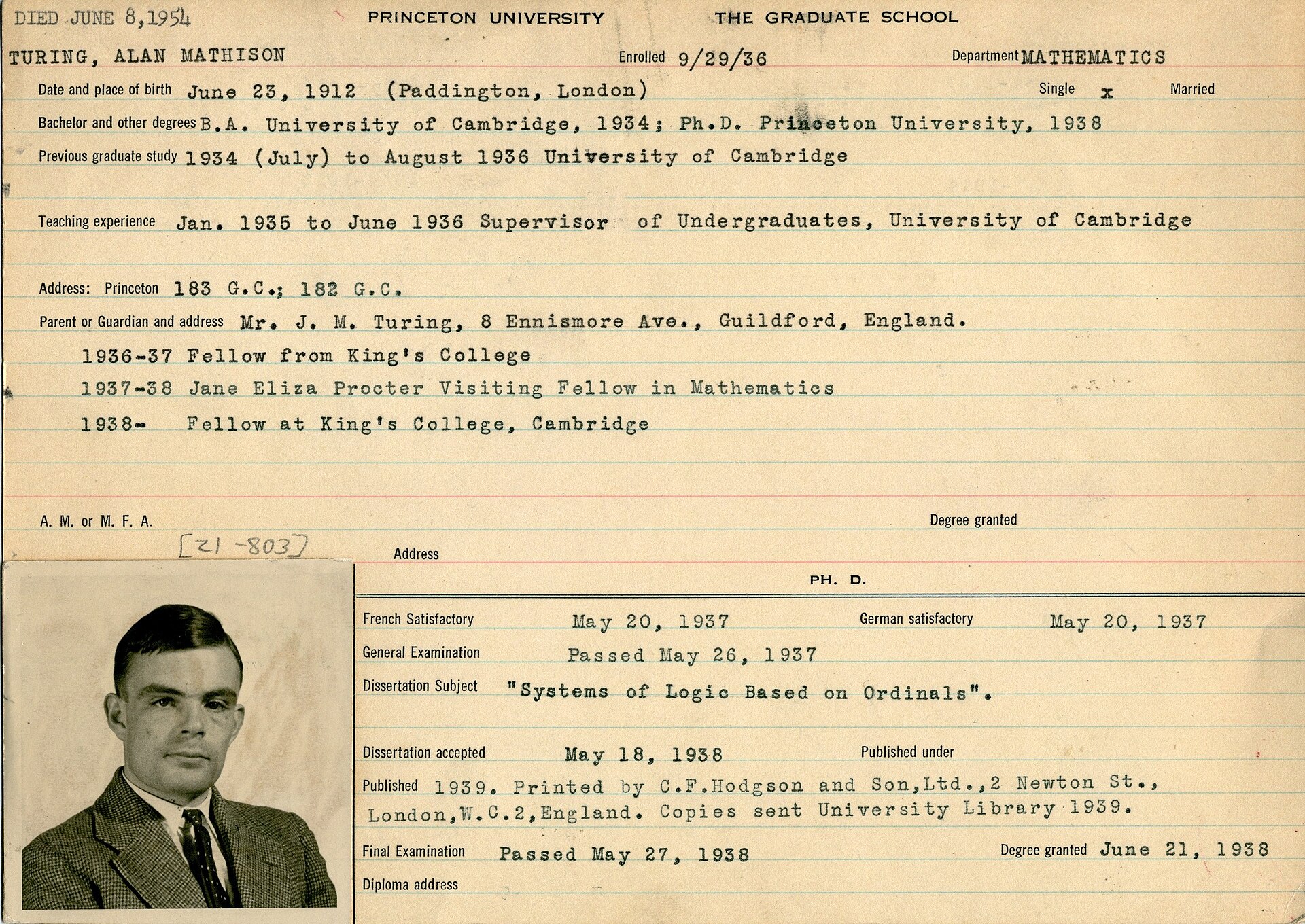
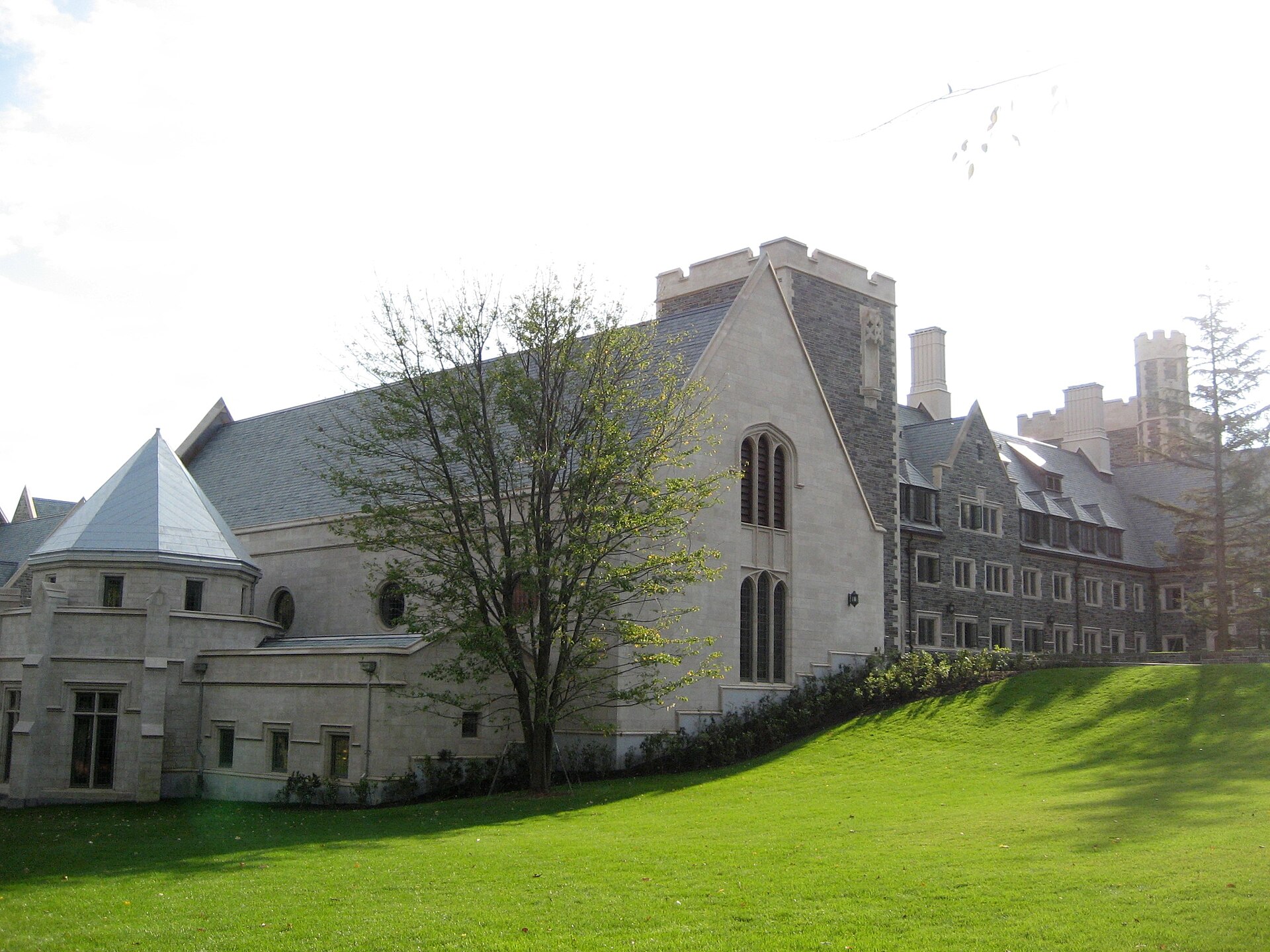
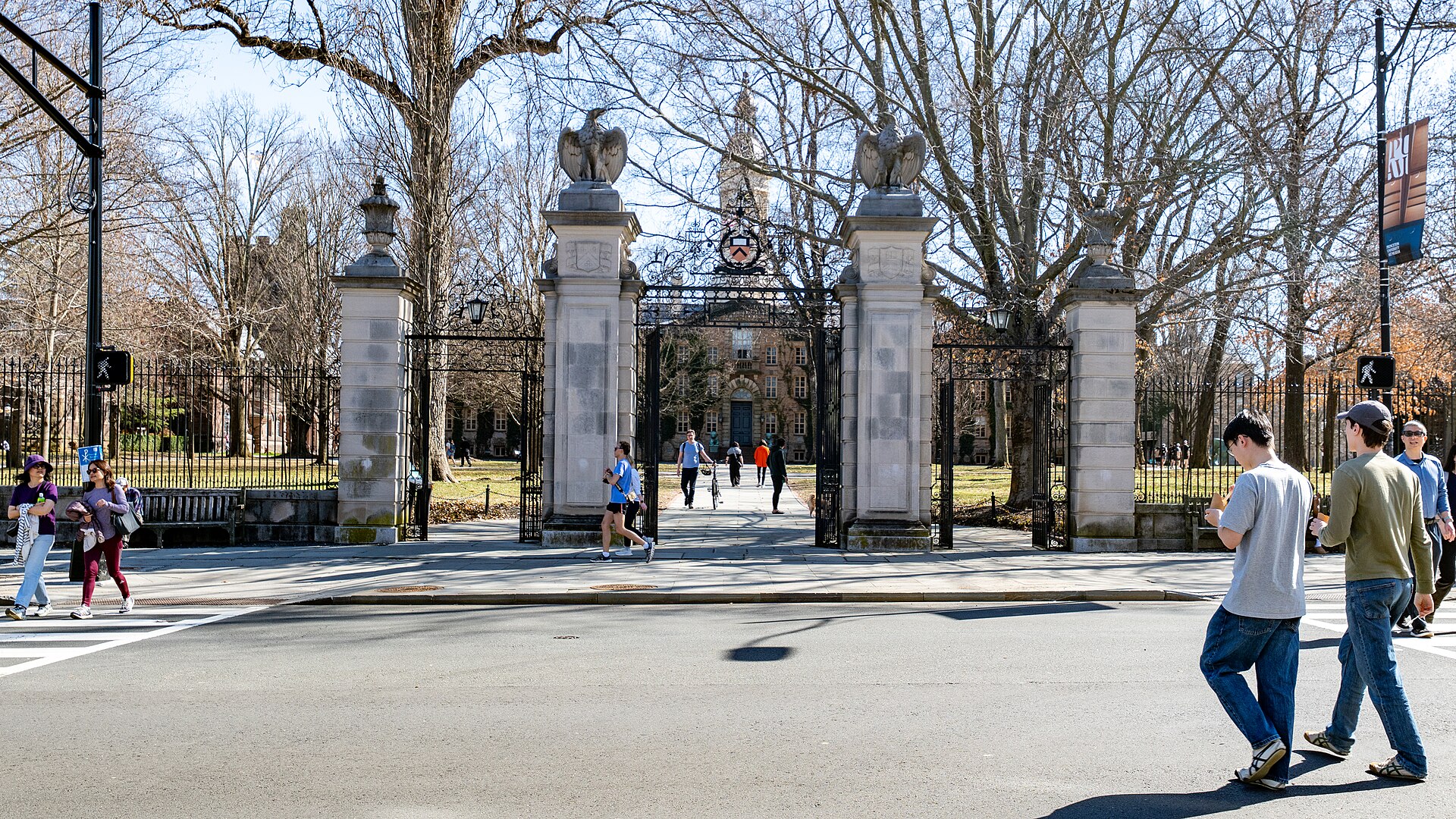


Why Princeton — Undergraduate Focus, No-Loan Aid & the Senior Thesis
Princeton has made deliberate structural choices that distinguish it from every other Ivy League university — choices that directly benefit international undergraduates. Understanding those choices is the starting point for any serious Princeton application strategy.
Princeton Acceptance Rate & Admitted Student Profile
Stats
Profile Stats
Rea Vs Rd
Princeton Admissions Requirements — Academics, Testing & International Profile
- Virtually all admitted students rank in the top 5% of their class
- Most rigorous curriculum available at your school is expected
- IB HL, A-Level, or AP courses with strong performance
- Teacher recommendations validate academic character and curiosity
- Princeton superscores SAT across multiple sittings
- ACT: highest single composite reported
- Tests required from Fall 2028; optional for earlier cycles
- TOEFL/IELTS/DET required for non-native English speakers
- IB: 42+ points, 7s in relevant Higher Level subjects
- A-Levels: A*A*A* in rigorous subjects
- CBSE/ISC: 96%+ in relevant subjects
- Graded written paper required — unique to Princeton
Princeton Application Components — Common App, Essays & the Graded Paper
Princeton accepts applications through the Common Application only. Every component is evaluated — there are no formalities. Princeton's graded written paper requirement is the most distinctive element of any top US application.
Princeton Essays — Writing the Perfect Common App & Princeton Supplement
Tips
Prompts
What Princeton Admissions Officers Are Looking For
Princeton uses a holistic review process. Every file is read by multiple admissions officers and rated across six dimensions. Understanding what each reviewer is assessing — and how to demonstrate each quality authentically — is the foundation of a strong Princeton strategy.
Princeton Financial Aid & Scholarships for International Students
Princeton's financial aid programme is one of the most generous in the world — and critically, it applies equally to international students. Princeton is need-blind for all applicants worldwide and meets 100% of demonstrated financial need entirely in grants.
Aid amounts are based on Princeton's published need-based formula and Office of Financial Aid guidance. Individual packages are determined case-by-case by Princeton's Financial Aid Office.
Stats
Contribution Tiers
| Note | Range | Percent | Percent Value |
|---|---|---|---|
| Full cost typically covered — $0 expected | Under $75,000 | 100% | 100 |
| Minimal contribution, typically 0–5% of income | $75K–$100K | 92% | 92 |
| Modest contribution, roughly 5–10% of income | $100K–$150K | 80% | 80 |
| Scaled contribution; substantial grants still available | $150K–$200K | 60% | 60 |
| Some grant aid available; contact Financial Aid Office | Over $200K | 30% | 30 |
Key Dates
Advantages
- Higher acceptance rate (~7–8% SCEA vs ~3–4% RD)
- Non-binding — you are free to compare financial aid offers before committing
- Signals genuine first-choice commitment to Princeton
- Earlier decision in mid-December
- More holistic review with less volume pressure
Disadvantages
- Cannot apply EA or ED to other private US universities simultaneously
- Public universities and UK/non-US applications remain unrestricted
- Application must be complete and strongest by November 1
- Less time to include senior-year results or new achievements
- If deferred, wait until April with limited other early options
Princeton Interview — Format, Questions & Preparation
Princeton alumni conduct interviews for applicants worldwide — typically a 45–60 minute conversation. The interview is conversational and evaluative: your interviewer submits a report on your intellectual engagement, character, and fit with Princeton's community. It is an opportunity, not a hurdle, and most Princeton-admitted students report positive interview experiences.
Meta
Questions
Princeton's Residential Colleges & Eating Clubs
Princeton's residential life is shaped by two institutions found nowhere else in American higher education: the seven residential colleges for freshmen and sophomores, and the eleven eating clubs for juniors and seniors. Together they create a distinctive campus community that is one of Princeton's most celebrated features.
Houses
Lottery Steps
- All first and second-year students live and dine in one of seven residential colleges: Butler, Forbes, Huo, Mathey, Rockefeller, Whitman, Yeh
- Each college has its own dining hall, common spaces, Master, academic advisers, and programming
- Students are assigned to a residential college; the assignment shapes first-year friendships and academic community
- From junior year, students may join one of eleven eating clubs on Prospect Avenue ('The Street')
- Four clubs are 'sign-in' (open to all by lottery); seven are 'bicker' (selective admission process)
- Financial aid covers the average eating club cost — aid recipients can join a club without additional out-of-pocket expense
Princeton Programmes & Undergraduate Concentrations
- {"label":"Undergraduate concentrations available","value":"35+"}
- {"label":"When concentration declared","value":"Sophomore year"}
- {"label":"Senior thesis","value":"Required — all students"}
- {"label":"Junior independent work","value":"Required — most departments"}
- {"label":"Engineering departments","value":"8"}
- {"label":"Signature programme","value":"ORFE"}
- {"label":"Founding year","value":"1875"}
- {"label":"Supplemental essay","value":"Required (B.S.E. specific)"}
- {"label":"Undergraduate access","value":"Certificate alongside A.B."}
- {"label":"Founded","value":"1930"}
- {"label":"Global ranking","value":"Top 3 globally"}
- {"label":"Graduate flagship","value":"MPA/MPP"}
- {"label":"Approach","value":"Interdisciplinary"}
- {"label":"Access","value":"Certificate + A.B./B.S.E."}
- {"label":"Faculty","value":"50+ affiliated"}
- {"label":"Research","value":"PNI labs open to undergrads"}
- {"label":"Graduate students","value":"~3,200"}
- {"label":"PhD programmes","value":"42"}
- {"label":"Graduate funding","value":"Fully funded PhDs"}
- {"label":"Faculty:PhD student ratio","value":"Extremely low"}
Research & Extracurricular Opportunities at Princeton
Career Outcomes & Princeton Alumni Network
Princeton's alumni network is particularly powerful in public service, academia, and quantitative finance — fields where Princeton's specific academic culture (the thesis, the 5:1 ratio, the SPIA pipeline) creates a distinctive advantage that brand name alone does not.
Stats
Categories
Our Princeton Admissions Track Record & Student Success Stories
Faqs
Is Princeton need-blind for international students?+
Yes. Princeton is one of fewer than ten universities in the world that are need-blind for all applicants, including international students. Applying for financial aid — even if you need 100% of costs covered — does not disadvantage your application in any way. If admitted, Princeton meets 100% of demonstrated financial need entirely in grants, with no loans.
What is the graded written paper requirement?+
Princeton requires you to submit one graded analytical essay from your secondary school coursework — preferably from English, history, or a humanities subject. The paper must be in English, include your teacher's comments and a grade or rubric, and be an original analytical essay (not a creative piece or science lab report). This is unique among top US universities and is a genuine evaluation of your academic writing ability.
What is Princeton SCEA and is it better than Regular Decision?+
Single Choice Early Action (SCEA) is Princeton's early round. It is non-binding (you are not obligated to attend if admitted) but restrictive (you cannot apply EA or ED to other private US universities while your Princeton SCEA is pending). SCEA historically carries a higher acceptance rate and signals genuine first-choice commitment. For most applicants with a complete application by November 1, SCEA is the recommended strategy.
Are standardised tests required at Princeton?+
Tests are currently optional for Fall 2026 and 2027 entry, but Princeton has confirmed they will be required from Fall 2028. For international students applying in the optional window, submitting strong scores (SAT 1490+ or ACT 34+) typically adds positive academic context to a file.
Does Princeton prefer certain concentrations at admission?+
Princeton does not admit students to specific departments — all undergraduates are admitted to Princeton and choose their concentration in sophomore year. However, engineering applicants must apply for the B.S.E. programme specifically, which requires a different supplemental essay. The admissions process is holistic regardless of intended field.
Is the senior thesis required for all Princeton students?+
Yes. Every Princeton undergraduate, in every department, completes a year-long senior thesis — an original research project supervised by a faculty adviser. In most departments, students also complete independent junior papers. The thesis is non-negotiable and is what makes a Princeton degree fundamentally different from any other undergraduate credential in the US.
What English language tests does Princeton accept?+
Princeton accepts the TOEFL iBT (minimum 100), IELTS Academic (minimum 7.5), Duolingo English Test (minimum 120), and PTE Academic. You are exempt if English is your first language or if you have attended a school where English was the primary medium of instruction for at least three years.
Can I apply to both Princeton SCEA and other Ivy League schools early?+
Not to other private US universities simultaneously. SCEA restricts you from applying EA or ED to other private US universities while your Princeton SCEA is pending. You may, however, apply Early Action to US public universities (e.g. UMich, UNC, Georgia Tech) and to non-US universities (UK, Canada, etc.) without restriction.
Book a Free Princeton Admissions Strategy Session
In 60 minutes our Princeton admissions specialists will evaluate your academic profile, identify your application strengths and gaps, develop your essay strategy (including the graded paper), and determine whether SCEA or Regular Decision gives you the best odds.
- No commitment required
- Princeton specialists with insider knowledge
- Personalised strategy — not generic Ivy League advice
Princeton Admissions Requirements
Princeton Academic Requirements, The Honest Breakdown for International Students
What GPA, test scores, and academic profile do Princeton's admitted students actually have? And what does Princeton's unique senior thesis requirement mean for students from IB, A-Level, AP, and other international curricula?
GPA & Class Rank
Princeton and GPA, What the Data Shows
The honest picture: Princeton does not publish a minimum GPA. In practice, 3.9 on a 4.0 unweighted scale is the floor, not the expectation. Virtually all admitted students rank in the top 1–5% of their graduating class.
A 3.9+ GPA is a threshold, not a differentiator. What distinguishes Princeton's admitted students is the combination of excellent grades in exceptionally rigorous courses — plus genuine intellectual depth beyond the transcript.
Academic Context
Class Rank and School Context, How Princeton Reads Academic Performance
Princeton does not require class rank, and many international schools do not provide it. Princeton's admissions office is experienced at evaluating performance across widely different school systems — from the IB to the Chinese Gaokao to CBSE to A-Levels.
Standardised Testing
SAT Scores at Princeton, What You Actually Need
Princeton SAT Data — Admitted Students
| Label | Score | Percent |
|---|---|---|
| 25th percentile | 1490 | 60 |
| 75th percentile | 1560 | 90 |
| Target for strong submission | 1530+ | 78 |
Standardised Testing
ACT Scores at Princeton, The Data and the Strategy
Princeton ACT Data — Admitted Students
Metrics
Comparison Cards
Testing Strategy
Princeton Test Policy, The Strategic Decision Explained
Princeton's test policy has evolved post-pandemic, with a formal return to test-required admissions from Fall 2028. Understanding what 'test-optional' actually means — and when not submitting scores is or isn't advantageous — is important for Princeton applicants.
Submit Items
Withhold Items
Curricula
A-Levels and IB at Princeton, Specific Benchmarks
- {"label":"Competitive range","value":"42–45 points"}
- {"label":"HL expectations","value":"7,7,6 or 7,7,7 in subjects relevant to intended concentration"}
- {"label":"Subject rigour","value":"HL Mathematics: Analysis & Approaches (preferred for quantitative applicants); HL sciences or humanities aligned with Princeton concentration"}
- {"label":"Extended Essay","value":"A or B grade; read as evidence of independent research capability"}
- {"label":"Competitive range","value":"A*A*A* in rigorous subjects"}
- {"label":"Subject rigour","value":"Mathematics, Further Mathematics for STEM; English, History, Economics for humanities; Sciences for pre-med tracks"}
- {"label":"AS results","value":"Reviewed alongside predicted A-Level grades; strong AS supports the predicted grade argument"}
Advanced Placement
AP Courses at Princeton, What Counts and What to Take
For students in schools that offer AP courses, Advanced Placement performance is a significant component of the academic profile and provides standardised evidence that validates school grades.
Academic Rigour
Rigour of Secondary School Record, Princeton's Primary Academic Signal
Princeton lists 'Rigour of secondary school record' as one of its most important academic factors. Understanding what this means — and how Princeton's admissions office actually evaluates it — is fundamental to a competitive application.
Taking the most challenging courses available at your specific school, in the subjects most relevant to your genuine intellectual interests.
Subject Preparation
Subject Preparation Princeton Expects by Area
Princeton has no formal subject prerequisites for undergraduate admission. However, the academic profile of admitted students reveals clear expectations by intended concentration. The following reflects what competitive Princeton applicants in each field actually demonstrate.
Language Proficiency
English Language Requirements for International Princeton Applicants
Princeton requires English proficiency demonstration from non-native speakers who have not attended an English-medium school for at least three years. Four tests are accepted.
Princeton's application essays — the 500-word lived experience essay, the 250-word service essay, and the 250-word academic interest essay — are themselves the most revealing English writing evaluation. A student who writes compelling, fluent, precisely argued essays in English demonstrates proficiency more convincingly than any test score alone.
By Concentration
Academic Requirements by Concentration, What Different Princeton Paths Expect
Princeton does not formally consider intended concentration in admissions — students are admitted to Princeton and choose their concentration in sophomore year. However, the academic profile should be coherent with the stated intellectual interests the applicant describes in their essays.
| Signals | Expectation | Concentration |
|---|---|---|
| AMC/AIME/USAMO; competition maths; proof-writing | HL Maths AA / Further Maths A* | Mathematics |
| USACO Platinum; original software projects | HL Maths + CS background | Computer Science |
| Financial modelling; econometric research; data projects | HL Maths AA + Economics | ORFE (Operations Research) |
| Quantitative research; economic analysis projects | HL Maths AA + Economics | Economics |
| Original lab research; science fair achievement; RSI | HL Chemistry + Biology 7s | Molecular Biology / Chemistry |
| Physics olympiad; AMC/AIME; original experiments | HL Maths + Physics A*s | Physics |
| Engineering competition; design projects; USACO | HL Maths + Physics / CS | Engineering (B.S.E.) |
| Policy writing; MUN achievement; internship or research | Strong humanities + economics profile | SPIA / Public Policy |
| Graded paper strength; published writing; extended reading | Strong humanities A-Levels or IB HLs | History / English / Politics |
| Clinical or research experience; HL sciences 7s | HL Chemistry + Biology + Maths | Pre-Medical track (A.B.) |
International Systems
Princeton and International Education Systems, How Your Curriculum Is Evaluated
Roadmap
Building a Princeton Academic Profile, What to Do at Each Stage
- Select IGCSE or MYP subjects that leave maximum options for IB HL or A-Level selection.
- Identify subjects where you have genuine intellectual passion — not just grade potential.
- Begin exploring academic interests outside the classroom: competitions, independent reading, online coursework in your areas of genuine curiosity.
- These years are noticed in the Princeton file — an early record of intellectual ambition matters.
- IB HL subject selection — choose ambitiously, not strategically for grade optimisation.
- A-Level subject combination finalised with an eye to Princeton concentration coherence.
- Begin SAT or ACT preparation — take diagnostic sittings by early Grade 11.
- Identify research programmes to apply for (RSI, PRIMES, PROMYS, Polygence, Simons): deadlines are in winter, Grade 11.
- Begin developing the intellectual commitment (a project, competition, or research strand) that will become your primary narrative.
- Grade 11 summer is the most important summer for Princeton applicants. A competitive research programme, university lab attachment, or independently initiated project with measurable outcomes differentiates at the top of the applicant pool.
- Identify your strongest academic paper for the graded written paper requirement — review all your analytical essays from Grades 9–11.
- Begin drafting the Princeton supplement by the end of Grade 11.
- Confirm and finalise your graded written paper — choose the essay with the strongest teacher commentary.
- Finalise SAT/ACT scores by October for SCEA or December for RD.
- Request teacher recommendations from teachers who have had you for at least a year — ideally Grade 11 teachers who know your work well.
- Submit SCEA by November 1 if Princeton is your first choice and your application is genuinely complete.
Common Pitfalls
Academic Mistakes That Cost Princeton Applications, And How to Avoid Them
Real Outcomes
What Academic Profiles Tychr's Princeton-Admitted Students Had
The following profiles represent the academic backgrounds of students Tychr has supported through successful Princeton applications or Princeton-equivalent outcomes. They illustrate the range of preparation that works — and what made each application compelling.
Faqs
Is a 3.9 GPA enough for Princeton?+
A 3.9 GPA meets Princeton's stated minimum — but it is not sufficient on its own. Princeton receives applications from thousands of students with perfect or near-perfect GPAs. The academic profile must combine exceptional grades with exceptional rigour and genuine intellectual engagement beyond the transcript.
What IB score do I need for Princeton?+
Competitive IB applicants to Princeton typically have scores of 42 or above, with 7,7,7 or 7,7,6 in Higher Level subjects relevant to their intended concentration. The EE grade and subject matter — Princeton uses this as evidence of independent research capability. IB scores below 40 are below the competitive range for most Princeton applicants.
Does Princeton prefer SAT or ACT?+
No preference. Choose the test you score higher on. Take a diagnostic of both before committing. Many international students find the SAT's structure more familiar; the ACT's Science section rewards data-interpretation speed that can be learned through specific practice.
Can I apply to Princeton without test scores?+
Yes, for Fall 2026 and 2027 entry. Princeton returns to test-required admissions from Fall 2028. During the optional window, Tychr generally recommends submitting strong scores (1490+ SAT, 34+ ACT) rather than going test-optional — scores provide a standardised benchmark Princeton can compare across 50+ educational systems.
Does Princeton accept students who were not top of their class?+
Yes. Princeton evaluates academic performance in the context of your school's specific curriculum and the opportunities available to you. A student who was the top performer at a school with limited resources is evaluated in that context — not against a universal abstract standard.
Financial Aid & Scholarships
Princeton May Cost Your Family Less Than You Think. Here's the Full Picture.
Princeton's need-blind admissions and no-loan financial aid make it genuinely affordable for many international families. Here is exactly what Princeton costs, how the aid programme works, and what you need to do to access it.
Cost Transparency
What Princeton Actually Costs, The Full Annual Figure
Princeton's endowment — among the largest per student of any university in the world — funds the most comprehensive undergraduate financial aid programme in US higher education. Princeton can charge high sticker prices and subsidise lower-income families completely, which is exactly what it does.
Admissions Equality
Princeton's Need-Blind Policy, What It Means and Why It Matters
This policy applies to all admitted students globally, including international applicants. Princeton is one of fewer than ten universities in the world that is need-blind for international students — the others are Harvard, MIT, and a handful of elite US universities.
Institutional Power
Why Princeton Can Do This, The Endowment and the Mission
Financial Aid Walkthrough
Applying for Princeton Financial Aid, The Process Step by Step
Princeton financial aid is not automatic — it requires a separate application through the CSS Profile. International students must complete this process carefully and on time. Here is the complete process.
- Access cssprofile.collegeboard.org
- Register or log into your College Board student account
- Parent income from all sources (employment, business, investments)
- Parent assets (bank accounts, real estate, business interests)
- Non-custodial parent information if parents are separated or divorced
- Student income and assets
- Household size and number of siblings in college simultaneously
- Home equity (if parents own property)
- Any unusual financial circumstances (medical costs, family obligations)
- {"date":"November 1","label":"SCEA Applicants"}
- {"date":"February 1","label":"RD Applicants (approximate)"}
Global Admissions Aid
Princeton Financial Aid for International Students, How It Works
Princeton's need-blind, full-need, no-loan policy for international students is one of the most important and least well-understood facts in global university admissions. Here is what it means in practice for a student from outside the United States.
Financial Aid Estimates
What Princeton Financial Aid Actually Looks Like, Qualitative Bands
Approximate Princeton Aid by Family Income (illustrative)
These are illustrative qualitative estimates based on Princeton's publicly available aid framework. Individual circumstances vary significantly. Use Princeton's Net Price Calculator on the official website for a personalised estimate, or contact the Financial Aid Office directly for international family guidance.
For families earning under approximately $75,000–$100,000 per year, Princeton is effectively free. For families earning under $150,000, the annual contribution is typically a modest fraction of income. For families earning above $200,000, grants are still available and the exact amount depends on the CSS Profile assessment.
| Grant | Income | Contribution |
|---|---|---|
| Full cost typically covered | Under $75,000 | $0 |
| Near-full coverage; minimal contribution | $75,000–$100,000 | Typically $0–$5,000 |
| Significant grant; modest contribution | $100,000–$150,000 | Typically $5,000–$15,000 |
| Substantial grant; scaled contribution | $150,000–$200,000 | Typically $15,000–$30,000 |
| Grant available; larger contribution | Above $200,000 | Scales up; contact Financial Aid Office |
Table Headers
Scholarship Information
Princeton Scholarships, What Exists and Who Qualifies
Princeton does not award merit scholarships. All Princeton financial aid is need-based — awarded based solely on demonstrated family financial circumstances, not academic achievement, test scores, or extracurricular performance.
External Funding
External Scholarships, Additional Funding for Princeton Students
While Princeton itself offers only need-based grants, numerous external organisations award scholarships to Princeton applicants and students. These can supplement Princeton's grant for qualifying students, though Princeton's stacking policy affects how external awards interact with the institutional grant.
Debt-Free Education
Princeton's No-Loan Policy, Why It Matters and What It Actually Means
Princeton eliminated student loans from its standard financial aid packages in 2001 — the first major US university to do so. All institutional Princeton support is in the form of grants that are never repaid. This is one of the most financially transformative features of a Princeton education.
Student Employment
Student Employment at Princeton, What to Expect
Princeton financial aid packages include a student employment component — an expected contribution of approximately $2,000–$3,500 per year from on-campus or approved employment. This is modest compared to the overall aid package and provides professional experience alongside financial support.
- Research assistant positions in faculty labs (highly sought-after — provides both income and the research experience relevant to junior papers and the senior thesis)
- Library and administrative positions across Princeton's 17 libraries
- Dining and residential college services
- Academic tutoring and writing centre support
- Office of Admission: campus tour guide and ambassador roles
- IT and computing support positions
Benchmarking
Princeton vs. Other Ivies, Financial Aid Comparison for International Students
| Policy | School | No Loans | Typical Cost |
|---|---|---|---|
| Need-blind (intl) | Princeton | Yes (since 2001) | $0 (qualifying families) |
| Need-blind (intl) | Harvard | Yes | $0 (qualifying families) |
| Need-blind (intl) | MIT | Yes | $0 (qualifying families) |
| Need-aware (intl) | Yale | No (minimal) | ~$5,000–$20,000 |
| Need-aware (intl) | Dartmouth | No | ~$10,000–$25,000 |
| Need-aware (intl) | Columbia | No | ~$10,000–$25,000 |
| Need-aware (intl) | UPenn | No | ~$15,000–$30,000 |
| Need-aware (intl) | Cornell | No | ~$10,000–$30,000 |
Cost Analysis
Princeton vs. Alternatives, What You Actually Pay
For a family earning approximately $75,000 per year, Princeton — with its list price of $87,000 per year — may genuinely cost nothing, while a UK university or a US state university charges $30,000–$45,000 per year with no loan-free guarantee. The sticker price is not the real price for qualifying families.
| Policy | School | Contribution | Four Year Cost |
|---|---|---|---|
| Need-blind, full-need, no loans | Princeton | ~$0 | ~$0 |
| Need-blind, full-need, no loans | Harvard | ~$0 | ~$0 |
| Need-blind, full-need, no loans | MIT | ~$0 | ~$0 |
| Need-aware, full-need, some loans | Yale | ~$5,000–$15,000 | ~$20,000–$60,000 |
| Limited international aid | Top state university (out-of-state) | ~$30,000–$45,000 | ~$120,000–$180,000 |
| Limited international aid | UK Russell Group (London) | ~$30,000–$40,000/year | ~$120,000–$160,000 |
Financial Appeals
Appealing a Princeton Financial Aid Decision, When and How
Princeton's initial financial aid offer is based on the CSS Profile information submitted. If circumstances have changed or the initial offer doesn't accurately reflect your family's financial situation, Princeton has a clear, responsive appeals process.
Princeton's financial aid formula is already very generous. Appeals are most successful when based on a genuine change in circumstances or a clear error in the initial calculation — not on disagreement with the formula's assessment of a stable financial situation.
How To Appeal
- Contact Princeton's Office of Financial Aid directly by phone or through the MyFinAid student portal
- Submit a written appeal explaining the specific circumstances that justify reconsideration
- Provide documentation supporting the appeal: income change records, medical bills, job loss documentation, or other relevant evidence
When To Appeal
- Family financial circumstances have changed significantly since the CSS Profile was submitted (job loss, medical expenses, family crisis, business failure)
- The CSS Profile contained an error or omission that affected the aid calculation
- The initial offer appears materially inconsistent with the family's actual financial situation
- A competing university has offered substantially different aid (relevant primarily for comparing packages before accepting)
Timeline & Planning
Planning for Princeton Costs, What to Do and When
ESSAYS
Princeton Essays — Why They Matter More Than at Almost Any Other University
At 4.4% acceptance, thousands of Princeton applicants arrive with near-perfect grades and top test scores. What separates admitted students is authenticity, intellectual depth, and a genuine connection between who they are and what Princeton stands for — in the Nation's Service.
Princeton's supplement is among the most substantive of any Ivy League school: five short-answer questions, two substantial essays, one academic interest essay, and the unique graded written paper requirement. Together, these give Princeton's admissions committee a richer portrait than grades and tests alone can provide. This guide covers every prompt and the graded paper — with strategy specific to Princeton's values.
OVERVIEW
Princeton Essay Structure — What You're Writing
Princeton's essay suite consists of the following components, all submitted through the Common Application. Princeton's total writing requirement is among the most extensive in the Ivy League.
ESSAY PROMPTS
Princeton 2025–2026 Supplemental Essay Prompts
PERSONAL STATEMENT
The Common App Personal Statement for Princeton
The 650-word Common App Personal Statement is your most important single document — shared with every university on your list, including Princeton. Princeton reads it as one component of a holistic application, alongside its own substantial supplement and the graded written paper.
For Princeton specifically, the personal statement and the supplemental essays should complement each other without repeating content. If your personal statement centres on your intellectual passion for public policy, your Community essay should not also focus on policy work — Princeton's reviewers read the complete file and expect a multi-dimensional portrait. Each piece of writing should reveal something that no other piece does.
Princeton's admissions officers read approximately 37,000 personal statements each cycle. The ones that are remembered are specific: they centre on a precise moment, a named person, a concrete experience — and they make an original argument or observation that could have come from no other applicant. The narrative of 'I overcame adversity and learned resilience' is not a problem in itself; it becomes a problem when it is the structure and the insight, rather than the starting point for something more specific and honest.
STRATEGY
Princeton Supplement Strategy — How the Essays Work Together
Princeton's eight-piece writing requirement is an opportunity to build a genuinely multidimensional portrait. Think of the essays as different lenses — each one should show Princeton something that no other piece of writing does.
TOPIC SELECTION
Choosing Essay Topics for Princeton
The most common mistake Princeton applicants make is choosing topics that sound impressive rather than topics that are genuinely and specifically theirs. Princeton's admissions officers have read every impressive-sounding topic — the international student who started an NGO, the mathematician who won a national olympiad medal, the community builder whose project transformed their neighbourhood. These topics are not problems in themselves; the problem is when the essay is about the achievement rather than the person behind it.
COMMON MISTAKES
Princeton Essay Mistakes to Avoid
- Writing the Community essay as a list of cultural differences or demographic facts rather than a specific, personal narrative about your actual lived experience and what it means for how you engage intellectually
- Treating the Service essay as a résumé of volunteer hours — Princeton wants evidence that civic responsibility is a genuine value woven through your life, not a category you filled to strengthen the application
- Using the short-answer questions (50 words) to sound impressive rather than to be authentic, specific, and genuinely revelatory about who you are as a person
- Writing a generic academic essay that could apply to any research university — Princeton expects you to name specific courses, faculty members, research programmes, or academic traditions unique to Princeton
- Repeating the same theme across all essays — the personal statement and supplement should each show Princeton a different dimension of who you are; five variations of the same theme produce a flatter portrait than the actual person
- Choosing an inappropriate graded written paper — creative writing, science lab reports, personal reflections, and formulaic five-paragraph essays do not serve the requirement well; choose your best original analytical essay
- Approaching the essays as a performance for the admissions committee rather than as genuine communication — Princeton's admissions officers are experienced readers who have seen every form of self-presentation; authenticity reads clearly and distinguishes genuine applicants from those performing a version of themselves
ESSAY FAQs
Princeton Essay — Frequently Asked Questions
Does Princeton prefer a specific Common App prompt?+
No. Princeton reads all seven Common App prompts equally. The prompt matters far less than what you do with it. Choose the prompt that best frames the specific story you want to tell — not the one that sounds most intellectually impressive.
Can I reuse essays I've written for other universities?+
You can use the same Common App Personal Statement across all universities. However, Princeton's supplemental essays — particularly the Community essay and the Academic Interest essay — must be specific to Princeton. An essay that could be submitted unchanged to Harvard, Yale, or Columbia will not serve you well in Princeton's review.
How should I choose my graded written paper?+
Choose the paper that best demonstrates your ability to construct an original argument in clear, precise academic prose — with the most substantive teacher commentary available. Quality and analytical depth matter more than recency or the subject grade the paper received. A carefully argued history essay from Grade 10 with rich, specific teacher feedback often outperforms a rushed Grade 12 essay with minimal commentary.
How important are the 50-word short answers?+
More important than they appear. These three questions are Princeton's informal introduction to your personality — every admissions officer who reads your file reads these. A short answer that is unexpectedly specific, genuinely honest, or disarmingly personal creates an impression that stays with the reader through the file. In a pool where thousands of applicants are impressive, being real and specific is a meaningful differentiator.
Should my academic interest essay commit me to a specific concentration?+
You should name your primary area of intellectual interest — but you are not locked into it. Princeton students declare concentrations in sophomore year and often change direction. The academic interest essay should demonstrate genuine curiosity and specific knowledge of Princeton's offerings in your area, not an inflexible commitment to a single concentration.
How many times should I revise my Princeton essays?+
The most effective Princeton applicants revise each essay five to eight times before submitting. The first draft establishes the idea; subsequent drafts refine the voice, eliminate generalities, sharpen the argument, and test whether the essay is specific enough that no other applicant could have written it. That last test is the most reliable indicator that an essay is ready.
My graded written paper was in a language other than English. What should I do?+
Princeton's requirement is that the paper be originally written in English — a translation of a paper written in another language is not acceptable. If your secondary schooling was primarily in a non-English language, discuss this with your school counsellor and contact Princeton's admissions office for guidance. If you have written academic essays in English-medium classes (ESL, international school English courses, or AP English), those may be appropriate.
What is the biggest single mistake Princeton applicants make in their essays?+
Writing what they think Princeton wants to read — rather than writing what is genuinely, specifically, and irreplaceably theirs. Princeton's admissions committee reads 37,000 applications. The ones that are remembered in committee discussions are specific, honest, and unmistakably personal. The ones that disappear are written for an imagined admissions officer rather than from genuine self-knowledge.
Courses — schools, degrees & intake
44 degrees across 5 groupings.
Princeton School of Engineering and Applied Science (SEAS) · 8 degrees
Architecture
Bioengineering
Chemical and Biological Engineering
Civil and Environmental Engineering
Electrical and Computer Engineering
Engineering Physics
Mechanical and Aerospace Engineering
Operations Research and Financial Engineering
Princeton School of Public and International Affairs (SPIA) · 1 degrees
Public and International Affairs
Humanities · 15 degrees
African American Studies
American Studies
Art and Archaeology
Classics
Comparative Literature
English
French and Italian
Gender and Sexuality Studies
German
History
Music
Philosophy
Religion
Slavic Languages and Literatures
Spanish and Portuguese
Social Sciences · 10 degrees
Anthropology
East Asian Studies
Economics
Environmental Studies
Global Health and Health Policy
Linguistics
Near Eastern Studies
Politics
Psychology
Sociology
Natural Sciences and Mathematics · 10 degrees
Astrophysical Sciences
Chemistry
Computer Science
Ecology and Evolutionary Biology
Geosciences
Mathematics
Molecular Biology
Neuroscience
Physics
Quantitative and Computational Biology
Want your real chances at Princeton University?
Create a free TYCHR account for your personalised admit-chance, a shortlist you can track, exact entry requirements, and essay + counselling help.